

TwinLight Laser Periodontal Treatment in Hamilton, ON
If you’ve been told you need periodontal treatment, it’s normal to worry about “gum surgery,” downtime, and discomfort. TwinLight is Fotona’s minimally invasive laser approach to periodontal therapy, designed to treat infected gum pockets while aiming for a gentler experience than traditional surgical methods. The unique advantage of TwinLight is that it uses two complementary laser wavelengths in a single protocol—Er:YAG and Nd:YAG—so each step can be done with the wavelength best suited for that job. Source Source
At Excel Dental in Hamilton, we offer TwinLight periodontal treatment as part of our Fotona laser dentistry services. Below, I’ll explain what TwinLight is, how it works, and why many patients like it when they’re looking for a less invasive path to healthier gums.
What TwinLight periodontal treatment is
TwinLight periodontal treatment is a comprehensive laser-based periodontal therapy that incorporates two of dentistry’s most established laser wavelengths:
- Er:YAG (2940 nm) – used for efficient removal of infected surface tissue, bacterial biofilm, and calculus from root surfaces and periodontal pockets. Source
- Nd:YAG (1064 nm) – used for deeper disinfection and coagulation support, and to help create conditions that encourage stable healing. Source
Fotona describes TwinLight as “wavelength-optimized,” meaning the protocol intentionally leverages each wavelength’s strengths rather than trying to do everything with one laser. That’s a big part of what makes TwinLight stand out among laser periodontal therapies. Source
Why it’s considered less invasive than traditional periodontal surgery
Traditional periodontal surgery can involve incisions (scalpels), tissue reflection (flaps), and sutures, followed by a more noticeable recovery period. TwinLight is designed to reduce that level of tissue trauma by treating the infected pocket environment and root surfaces through a laser protocol that often requires little to no anesthesia and aims to minimize bleeding. On Fotona’s TwinLight periodontal page, the “at a glance” summary emphasizes minimal or no pain, lessened bleeding, and “no needles required.” Source
Less invasive doesn’t mean “no big deal,” though. Periodontal disease is serious, and treatment decisions should be based on pocket depths, bone levels, inflammation, and how you respond to non-surgical care. The value here is that TwinLight can be a strong option when you want an approach focused on tissue preservation and patient comfort.
How TwinLight works
Fotona presents the TwinLight periodontal protocol as three primary steps:
- Step 1: Nd:YAG laser removes the diseased epithelial lining of the periodontal pocket and improves access to the root surface. Source
- Step 2: Er:YAG laser thoroughly removes microbial biofilm and calculus from the root surface. Source
- Step 3: Nd:YAG laser energy is used to coagulate and promote formation of a stable fibrin clot. Source
Fotona also explains the “why” behind the combination: Nd:YAG is described as being superior for coagulation and deep disinfection, while Er:YAG is described as uniquely efficient at gently removing infected surface tissue and calculus. Together, they’re intended to support safety, efficacy, and healing conditions. Source
What to expect at your TwinLight periodontal appointment
Every patient starts in a different place, so your exact plan depends on your gum measurements, inflammation levels, and whether we’re treating one area or multiple areas. That said, TwinLight is commonly described by Fotona as being completed in a single procedure for optimal results. Source
A typical visit usually includes:
- Clinical evaluation and planning: We confirm what’s driving your gum disease and whether TwinLight is appropriate for your stage and goals.
- Comfort setup: Even though Fotona highlights that TwinLight can often be performed with little to no anesthesia and may not require needles, comfort is always individualized. Source
- Pocket treatment and root surface decontamination: Following the dual-wavelength protocol described above.
- Aftercare instructions: You’ll get clear guidance on hygiene, gentle rinsing, and what to avoid during early healing.
Recovery and downtime
One of the most appealing points for many patients is the recovery profile. Fotona states that recovery is minimal, with most patients resuming normal activities within 24–48 hours after the procedure. Source
That doesn’t mean you ignore your mouth for two days and call it done. Healing still depends heavily on how well you follow home care guidance, whether you smoke, how inflamed the tissues were at baseline, and whether you’re managing contributing factors like diabetes, dry mouth, or heavy plaque accumulation.
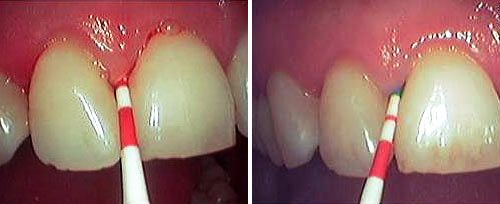
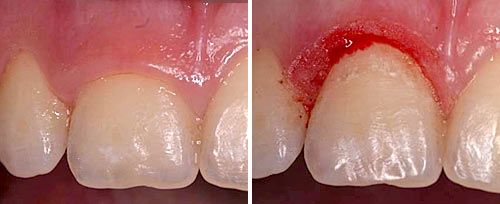
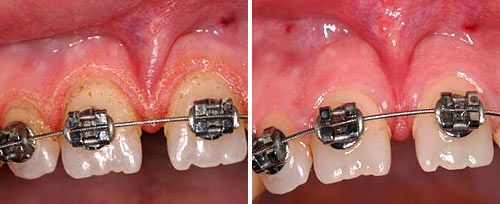
Clinical before-and-after photos (hotlinked, centered)
Fotona includes clinical result images on their TwinLight periodontal treatment page. The examples below are hosted by Fotona and are hotlinked directly from their site. Results vary from patient to patient, and photos are not a promise of identical outcomes.
TwinLight vs. traditional periodontal surgery (distilled)
- Invasiveness: TwinLight is designed to be minimally invasive, and Fotona emphasizes “no needles required” and lessened bleeding in their overview. Source
- Comfort: Fotona positions TwinLight as a minimal- or no-pain procedure, often requiring little to no anesthesia. Source
- Recovery time: Fotona states most patients resume normal activities within 24–48 hours. Source
- Technology advantage: TwinLight uses both Er:YAG and Nd:YAG in one protocol so each step can be wavelength-optimized (root surface debridement/biofilm removal vs. coagulation/deeper disinfection). Source
The most important point: the “best” option depends on your diagnosis. Some cases respond well to non-surgical periodontal therapy, some benefit from laser-assisted approaches, and some still require conventional surgery for access and predictable outcomes. The right plan is the one that actually stabilizes the disease.
FAQs
Is TwinLight a replacement for deep cleaning (scaling and root planing)?
It depends on the case. Periodontal therapy can include multiple approaches, and TwinLight is a laser protocol designed to improve pocket conditions and gum health by addressing biofilm/calculus and diseased pocket lining. The best approach is based on pocket depths, inflammation, and how you respond to initial therapy. Source
Why does TwinLight use two wavelengths?
Fotona explains that using both Er:YAG and Nd:YAG in a single treatment allows “optimal wavelength combination.” Nd:YAG is described as superior for coagulation and deeper disinfection, while Er:YAG is described as efficient at gently removing infected surface tissue and calculus from root surfaces. Source
How long does recovery take?
Fotona reports minimal recovery, with most patients resuming normal activities within 24–48 hours. We still recommend following aftercare closely to protect early healing and reduce reinfection risk. Source
Will I need anesthesia?
Some patients need very little, and some benefit from more support. Fotona highlights that TwinLight often requires little to no anesthesia and may not require needles, but we always tailor comfort measures to your needs and the extent of treatment. Source
How many sessions are needed?
Fotona states the procedure is effectively completed in a single procedure for optimal results, though periodontal care typically includes follow-up visits to evaluate healing and maintenance planning. Source
Talk to us about TwinLight periodontal treatment in Hamilton
If you’ve been diagnosed with gum disease, or you’ve noticed warning signs like bleeding gums, persistent bad breath, gum recession, or loose-feeling teeth, the sooner you get a clear periodontal assessment, the better your long-term outlook tends to be.
Visit Excel Dental online to request an appointment. And if you’ve been through periodontal treatment before—laser or traditional—consider sharing your experience in the comments. What did recovery feel like? What advice helped the most? Those real stories help other patients feel less intimidated and more prepared.
Sources:
Fotona: TwinLight® Periodontal Treatment (US)
Fotona: Periodontics / TwinLight® Periodontal Treatment