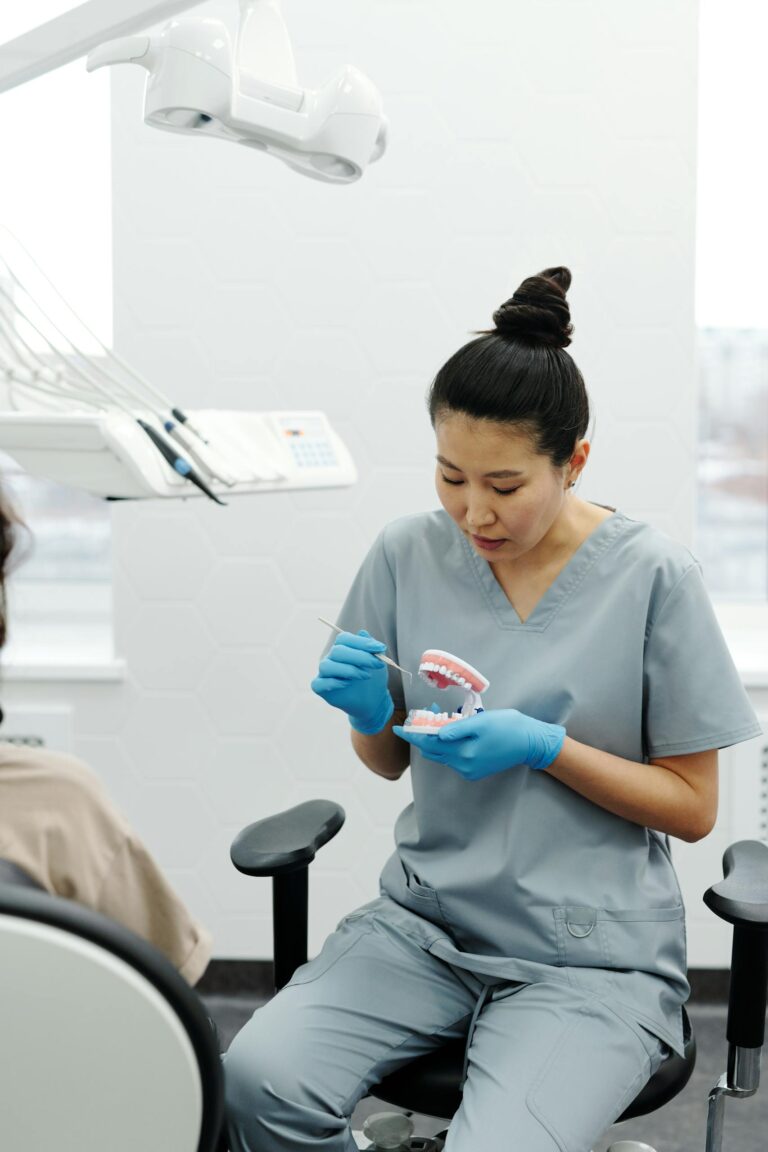

Do family dental checkups have to be every 6 months?
Six months is a common starting point, but family dental checkups should be based on age, oral-health risk, and what the dentist finds.
Bleeding gums are common, but if you have diabetes—or think you might—your dentist may ask about it because diabetes can affect gum inflammation, dry mouth, and healing. Here’s what to bring, what the dental team may check, and how home care fits in.
Bleeding, puffy, or bad-smelling gums can be an early warning sign. Learn the plain-language difference between gingivitis and periodontitis, what a dental exam checks, and when Hamilton families should book a gum evaluation.
A small amount of blood on floss can happen after a gap in cleaning, but it should start improving quickly. Learn when home care is reasonable, when bleeding should be booked for a dental exam, and how to keep cleaning between teeth gently while you wait.
If you notice sensitivity, small notches near the gumline, or gums that seem to be shrinking, brushing too hard may be part of the problem—but usually not the whole story. Here is what can cause gum recession and tooth abrasion, what to change at home, and when to book a dental exam.
Frequent snacking, sipping, and bedtime sugar can raise cavity risk even when portions are small. This guide shows how to set snack windows, choose water between meals, use fluoride toothpaste, and treat checkups as backup protection.
Sports drinks and energy drinks can affect teen teeth in two different ways: sugar can fuel cavities, and acidity can wear enamel. Here’s how to lower the risk without making sports or school days harder than they need to be.
Frequent sipping matters more than one drink with a meal. Learn which commute drinks can wear enamel, the early signs to watch for, and a few simple habits that lower risk.
Irregular schedules can make oral care harder, but a simple routine still helps. Learn how snacking, sipping, dry mouth, and fluoride toothpaste fit together.
Toothpaste labels can be confusing. This practical guide explains which active ingredients to look for if your main goal is cavity prevention, sensitivity relief, or help with early gum irritation, plus when symptoms mean it is time for a dental exam.
If you keep getting cavities even though you brush every day, it may be reasonable to ask your dentist whether prescription-strength 5,000 ppm fluoride toothpaste belongs in your prevention plan. Here is who it may help, what the evidence supports, and why it is not a do-it-yourself fix.
Water flossers can make home care easier when braces, bridges, or implants make string floss awkward to use. Here is where they fit, what the evidence suggests, and how to use one safely without overdoing the pressure.
End of content
End of content