
TwinLight Peri-Implantitis Treatment in Hamilton, ON
If you have a dental implant that’s bleeding, sore, swollen, or showing signs of bone loss around it, you may be dealing with peri-implant disease. Peri-implantitis is a plaque-associated condition around implants that involves inflammation and progressive loss of supporting bone, and it needs timely, professional care. Source
At Excel Dental in Hamilton, we offer Fotona TwinLight peri-implantitis treatment as a minimally invasive, laser-assisted approach designed to clean the implant surface and reduce infection while protecting the fragile bone around the implant. Fotona’s TwinLight protocol is “wavelength optimized,” meaning it uses two laser wavelengths—Er:YAG and Nd:YAG—so each step can be performed with the wavelength best suited for that job. Source
What TwinLight peri-implantitis treatment is
Fotona TwinLight peri-implantitis treatment is a laser protocol used to remove diseased tissue, clean and decontaminate the implant surface, and support healthier healing conditions in the surrounding tissues. Fotona highlights several patient-focused benefits right on the treatment page:
- No needles required
- Chemical-free implant cleaning
- Lessened bleeding
Why two wavelengths matters
One of the biggest differentiators in Fotona’s TwinLight approach is the use of both Er:YAG (2940 nm) and Nd:YAG (1064 nm). On the peri-implantitis page, Fotona explains that the LightWalker system combines these two wavelengths in one platform and emphasizes protecting the “highly fragile bone surrounding the implant.” They also state that using Er:YAG in an optimal mode helps avoid thermal damage to surrounding bone and avoids significant alterations of the implant surface that can occur with other lasers. Source
How it works
Fotona outlines the protocol in three steps:
- Step 1: Removal of soft granulation tissue and ablation of infected bone with Er:YAG.
- Step 2: Removal of bacterial biofilm on implant surfaces with Er:YAG.
- Step 3: Bacterial reduction and biostimulation of bone tissue with Nd:YAG.
In plain language, the goal is to get the implant surface and surrounding tissues as clean and stable as possible, then support healing so the area can settle down and stay healthier long-term.
What to expect
Every case is different, because peri-implantitis can range from mild inflammation to advanced bone loss. Fotona notes that most cases can be effectively addressed in one to two sessions, depending on severity. Source
Common “what you’ll notice” points patients care about:
- Comfort: Fotona’s overview emphasizes a minimally invasive approach and notes “no needles required” in their at-a-glance summary, but comfort is always individualized in real practice. Source
- Bleeding: The approach is positioned as having lessened bleeding. Source
- Recovery: Fotona states recovery is minimal, with most patients resuming normal activities within 24–48 hours. Source
Clinical images (hotlinked, centered)
These images are hosted by Fotona on their peri-implantitis treatment page and are hotlinked directly from their site. They’re intended to show clinical examples of implant-surface cleaning and tissue improvement. Results vary based on baseline bone levels, inflammation severity, home care, bite forces, and overall health factors.
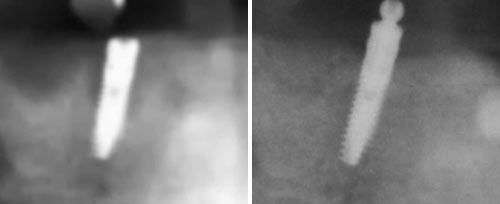
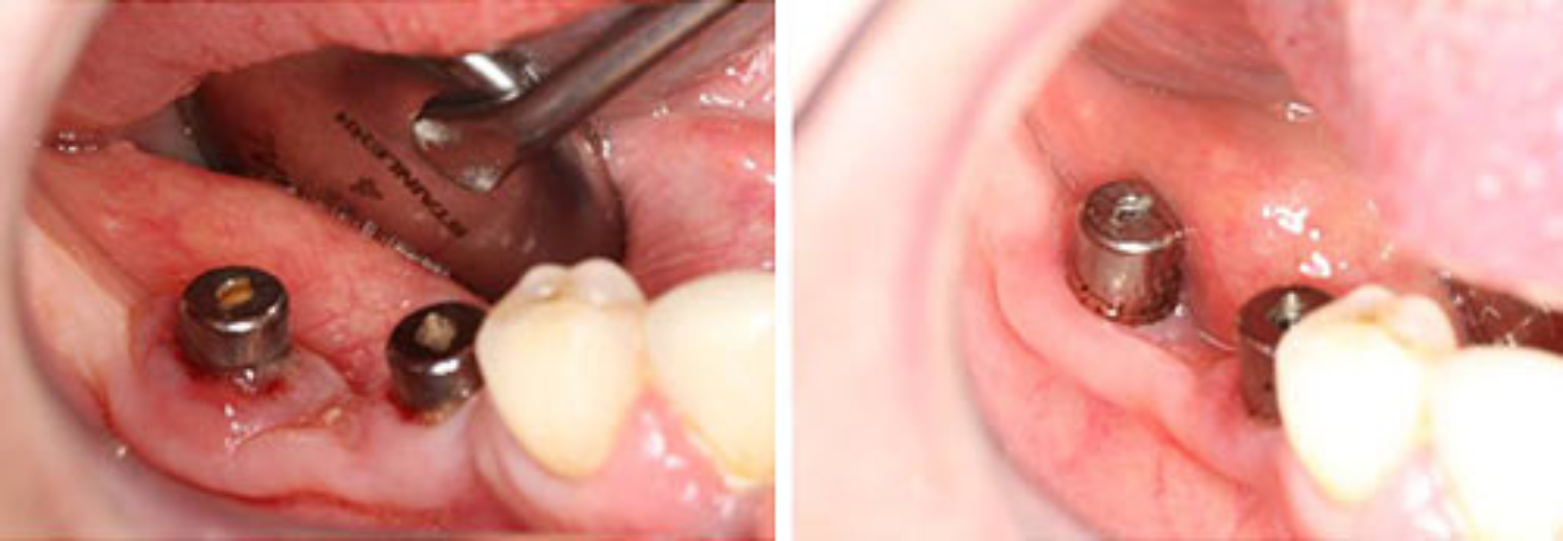
TwinLight vs. traditional peri-implantitis approaches (distilled)
- Cleaning approach: Fotona positions TwinLight as chemical-free implant cleaning (laser-based decontamination instead of chemical decontaminants). Source
- Tissue impact: The protocol is designed to be minimally invasive, with lessened bleeding and minimal discomfort. Source
- Bone/implant protection: Fotona emphasizes preserving fragile surrounding bone and avoiding thermal damage and implant-surface alteration when Er:YAG is used in an optimal mode. Source
- Time and recovery: Most cases are described as 1–2 sessions, and most patients resume normal activities in 24–48 hours. Source
What matters most is that the disease stabilizes and stays stable. Long-term implant health always comes back to consistent plaque control, appropriate professional maintenance, and catching inflammation early.
How common is peri-implant disease?
Peri-implant inflammation is not rare, especially over the long term. A 10-year follow-up study in edentulous patients with an implant-retained mandibular overdenture reported substantial incidence of peri-implant mucositis and peri-implantitis over time (with peri-implantitis incidence increasing by year 10). Source
This is one reason we take bleeding around implants seriously. Early intervention is often simpler than late-stage intervention.
FAQs
What’s the difference between peri-implant mucositis and peri-implantitis?
Peri-implant mucositis is inflammation in the soft tissue around an implant. Peri-implantitis includes inflammation plus progressive loss of supporting bone. Source
How many TwinLight sessions do most patients need?
Fotona notes that most peri-implantitis cases can be effectively addressed in one to two sessions, depending on severity. Source
What is “chemical-free implant cleaning”?
It means the implant surface is decontaminated using the laser protocol rather than relying on chemical agents as the primary cleaning method. Fotona lists chemical-free implant cleaning as one of the key at-a-glance benefits. Source
Is recovery really that fast?
Fotona states recovery is minimal, with most patients resuming normal activities within 24–48 hours. Your recovery can vary depending on how advanced the inflammation is, whether bone treatment is needed, and how well you follow aftercare instructions. Source
Can TwinLight save every failing implant?
Not always. The prognosis depends on how much bone has been lost, implant position and design, bite forces, and whether the implant can be maintained clean moving forward. The earlier peri-implantitis is treated, the better the odds usually are.
Talk to us about TwinLight peri-implantitis treatment in Hamilton
If you have bleeding around an implant, swelling, tenderness, bad taste, or you’ve been told there’s bone loss around an implant on X-rays, don’t wait. Early evaluation gives us more options and often leads to a better long-term outcome.
Visit Excel Dental online to request an appointment. And if you’ve had implant inflammation before, consider sharing what helped you most in the comments—your experience can help someone else recognize the signs sooner.
Sources:
Fotona: TwinLight® Peri-Implantitis Treatment
World Workshop consensus report (definition of peri-implant diseases)
Meijer et al. (2014), J Clin Periodontol: 10-year incidence of peri-implant mucositis and peri-implantitis