
Laser Dentistry: When It May Help, When It Probably Does Not, and What Patients in Ontario Should Ask
Laser dentistry is often marketed as a modern alternative to traditional dental treatment. In real life, it is better understood as a tool. Sometimes it can be useful. Sometimes it adds little. And sometimes standard treatment remains the clearer, more evidence-based choice.
For patients and families in Hamilton and across Ontario, the most helpful question is not whether a laser is available. It is this: what problem is the laser solving for my specific diagnosis?
That matters because different lasers do different jobs, different tissues respond differently, and the quality of evidence is not the same across all procedures.
What laser dentistry means in everyday language
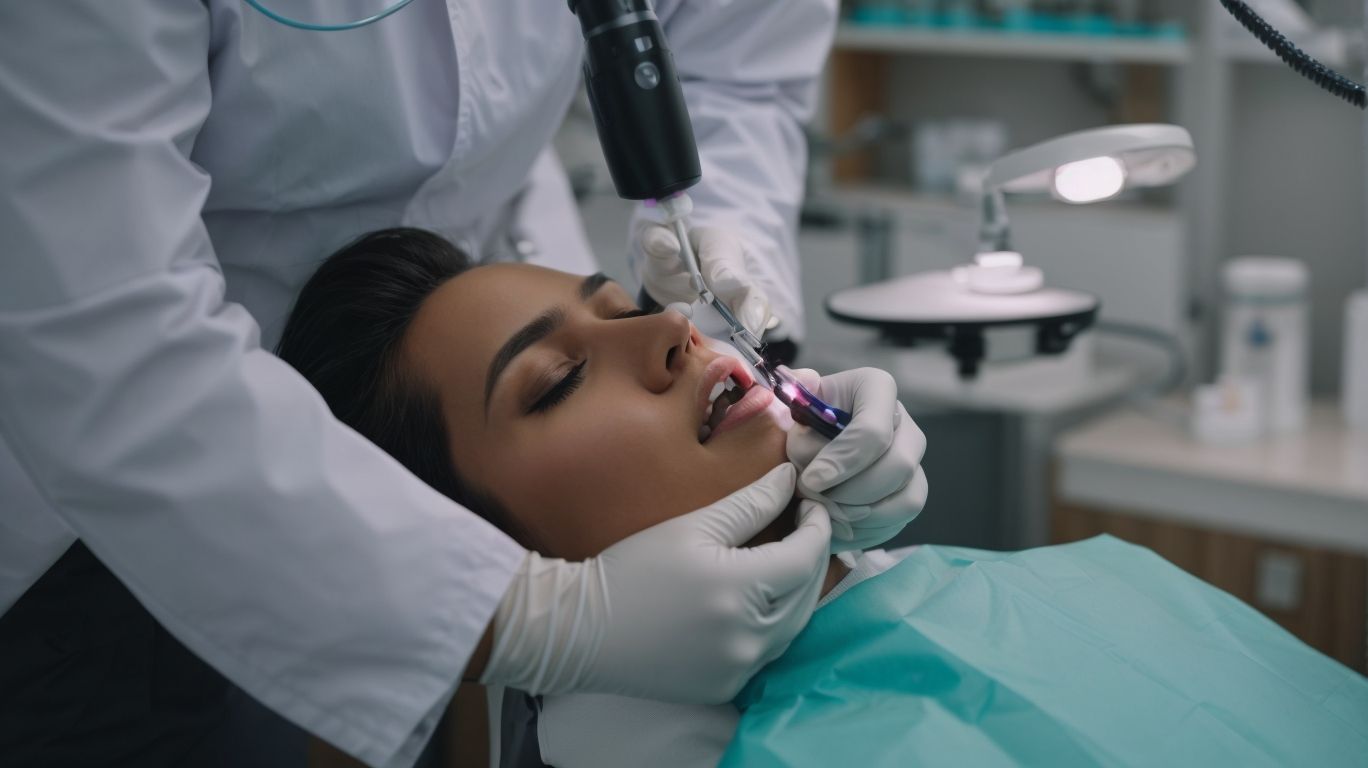
A dental laser uses concentrated light energy to interact with tissue. In dentistry, lasers may be used on soft tissue such as gums or a frenum, on hard tissue in selected situations, or for comfort-focused applications such as photobiomodulation.
Not all lasers are interchangeable. A diode laser, Er:YAG laser, Nd:YAG laser, and low-level laser used for photobiomodulation do not work the same way and should not be discussed as if they are one treatment. A benefit seen with one device for one procedure does not automatically apply to every other laser use.
That is one reason laser dentistry can be hard for patients to evaluate from advertisements alone. The technology itself is not the treatment goal. The diagnosis, the expected benefit, the alternatives, and the dentist’s training are what matter most.
When lasers may help
Lasers may be reasonable in selected soft-tissue procedures, especially when the goal is precise cutting of soft tissue with good visibility during treatment. Examples can include some frenectomy cases or certain gingival contouring procedures.
A recent labial frenectomy laser meta-analysis suggests that, in some studies, laser use was associated with less bleeding and better short-term postoperative comfort than conventional techniques. That does not mean lasers are always better, but it supports a careful, procedure-specific discussion in selected soft-tissue cases.
In practical terms, possible advantages in the right situation may include:
- better bleeding control during some soft-tissue procedures
- good precision in a small treatment area
- possibly less short-term discomfort after treatment in some cases
Even here, the details matter. The exact procedure, the type of laser, the operator’s experience, and whether a traditional technique would work just as well all affect whether a laser adds meaningful value.
When evidence is limited or mixed
Many laser claims sound broader than the evidence actually is. You may hear that lasers mean less pain, faster healing, better disinfection, or better long-term success. For some procedures, those claims are not well established.
For example, laser-related photobiomodulation is being studied as a way to reduce short-term pain after endodontic treatment. A recent review on photobiomodulation for endodontic pain suggests that some studies show a short-term comfort benefit. That may be helpful for some patients, but it is not the same as proving better healing, better infection control, or a higher long-term success rate for the tooth.
This is an important distinction. Feeling better in the first day or two after treatment can matter. It just should not be confused with stronger evidence that a tooth, implant, or gum condition will do better months or years later.
When standard care still leads
There are several important areas where standard, guideline-based treatment still drives care, even if a laser is discussed as an add-on.
Gum disease
For periodontitis, major periodontal guidance does not support routine laser use as a replacement for standard treatment. The EFP Stage I to III Periodontitis Guideline does not suggest replacing conventional professional mechanical plaque removal and subgingival instrumentation with laser treatment. It also does not suggest routine use of adjunctive methods in supportive periodontal care when standard treatment is the foundation.
In plain language, if you have gum disease, the main evidence-based treatment is still careful diagnosis, debridement or instrumentation, plaque control at home, risk-factor management, and ongoing maintenance. A laser should not be presented as a substitute for scaling and root planing or for the basics of periodontal care.
Peri-implant disease
The same caution applies around dental implants. The EFP Peri-implant Diseases Guideline does not suggest routine laser use in non-surgical peri-implantitis care and does not support laser monotherapy. Even in surgical care, guideline summaries describe limits on laser use for implant-surface decontamination and do not suggest it routinely.
So if an implant is inflamed or losing bone support, the core issues are still diagnosis, mechanical cleaning or decontamination, risk assessment, home care, and choosing the right non-surgical or surgical plan. A laser may be discussed in selected situations, but it should not be framed as a stand-alone answer.
Root canal treatment
Lasers are also studied in endodontics, especially for disinfection. The American Association of Endodontists position statement notes that laser-assisted disinfection is promising, but better clinical outcomes over standard root canal treatment have not been established. In other words, there is research interest, but not enough evidence to say that adding a laser reliably improves long-term success compared with good conventional care.
For patients, this means the basics still matter most: accurate diagnosis, careful cleaning and shaping, irrigation, disinfection, sealing the canal system well, and restoring the tooth appropriately afterward. If a laser is offered as an adjunct, it is reasonable to ask what additional benefit is expected for your particular tooth and whether that benefit is supported by outcome data, not just laboratory findings.
What Ontario patients should ask before saying yes
In Ontario, patients should expect informed, patient-centred treatment discussions. The RCDSO Standards and Guidance, including the Consent to Treatment standard, make clear that patients have the right to make informed choices about their care.
That means a laser recommendation should come with a clear explanation of benefits, limitations, risks, alternatives, and costs. It should also be clear why the laser is being recommended for your diagnosis rather than simply being described as newer or more advanced.
Helpful questions to ask include:
- What problem is the laser supposed to solve in my case?
- What are the standard non-laser alternatives?
- Is the laser replacing a step in treatment, or is it only an adjunct?
- What evidence supports this specific use for my condition?
- Is the expected benefit about short-term comfort, bleeding control, or long-term success?
- What are the possible downsides, limitations, or added costs?
- How much experience do you have with this device and this procedure?
These are not difficult questions. They are appropriate consent questions.
How to think about laser dentistry as a patient
A good rule of thumb is to separate the tool from the treatment goal.
If the goal is a selected soft-tissue procedure, a laser may be a reasonable option and may offer practical benefits in some cases. If the goal is treating gum disease, peri-implant disease, or improving root canal success, the evidence is more limited, and standard care remains the main driver of good outcomes.
That does not make lasers good or bad. It means they should be used thoughtfully, for the right reason, in the right hands, and with realistic expectations.
Bottom line
Laser dentistry can help in some situations, but it is not automatically the best option. The key question is what problem the laser is solving for your specific diagnosis.
For selected soft-tissue procedures, there may be advantages such as better bleeding control and possibly better short-term comfort. For gum disease, peri-implant disease, and root canal treatment, standard evidence-based care still matters most, and current guidelines do not support broad claims that lasers replace those protocols.
If laser treatment is being suggested, ask for a clear explanation of the expected benefit, the alternatives, the limits of the evidence, the added cost if any, and the clinician’s experience with that specific procedure. In Ontario, that is exactly the kind of discussion patients should expect.
Sources
- RCDSO Standards and Guidance
- EFP Stage I to III Periodontitis Guideline
- EFP Peri-implant Diseases Guideline
- AAE Position Statement on Lasers in Dentistry
- Labial Frenectomy Laser Meta-analysis
- Photobiomodulation for Endodontic Pain Review
- Journal of Dentistry Soft Tissue Laser Trial
- Pubmed
- Pubmed
- Pubmed
This article is for general education only and does not replace personalized advice, diagnosis, or treatment from a licensed dentist.