
Missing a Tooth? How Dentists Help Patients Choose Between an Implant, Bridge, or Denture
Three common ways to replace a missing tooth
When one tooth is missing, or when a small gap needs to be closed, dentists usually compare three main paths: an implant with a crown, a bridge, or a removable denture. Each option replaces the missing tooth in a different way, and each has trade-offs.
The right choice depends on the teeth beside the gap, bone support, gum health, bite forces, how many teeth are missing, and how easy the area will be to clean at home.
What dentists look at first
- the condition of the teeth beside the space
- how much bone is available where the tooth is missing
- gum health and any active periodontal disease
- the number and location of missing teeth
- how your bite loads the area when you chew
- how well you can clean the area every day
Those details help a dentist decide whether a fixed option, a removable option, or more planning steps should come first.
Implant with a crown
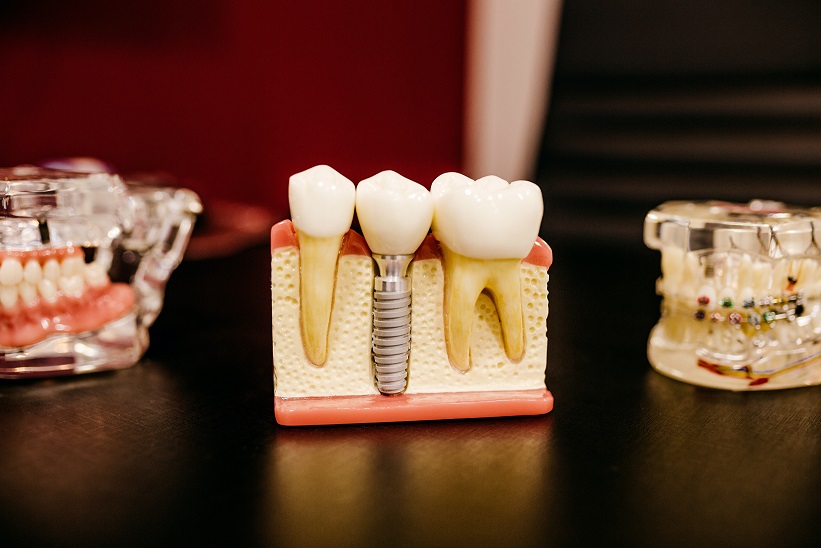
An implant is a small post placed in the jawbone to act like a tooth root. After healing, it supports a crown, which is the tooth-shaped part you see and use for chewing. In other words, the crown is part of the final restoration on top of the implant.
One advantage of an implant is that the teeth beside the gap usually do not need to be reshaped for crowns. That can matter when those neighboring teeth are healthy and worth preserving. Implants do need enough bone and suitable healing conditions, so planning may include x-rays, 3D imaging, or discussion of bone grafting in some cases.
Implants may help support the bone in the area because chewing forces are transferred through the implant, but they do not guarantee that bone change will never happen. A recent systematic review found encouraging short-term results for implant-supported crowns and fixed partial dentures, while longer-term head-to-head evidence is still more limited than many people assume.
Daily care still matters. An implant crown needs brushing, cleaning around the gumline, and regular follow-up so the bite and surrounding tissues can be checked.
Bridge
A conventional bridge fills the gap by attaching an artificial tooth to crowns on the teeth beside it. Those neighboring teeth are prepared for crowns, so a bridge changes the adjacent teeth more than an implant usually does.
That can make practical sense when the teeth next to the space already need large restorations, or when an implant is not the right fit. A bridge is fixed in place, which many patients like. The trade-off is cleaning: the space under the bridge needs extra attention with floss threaders, special floss, or small interdental brushes.
Because a bridge depends on the supporting teeth, those teeth need ongoing care too. A dentist will want to know whether they are strong enough, free of major decay, and able to support the bridge over time.
Partial denture or complete denture
A denture is a removable appliance. A partial denture can replace one or more missing teeth while working around the teeth that remain. A complete denture replaces all teeth in an upper or lower arch.
Dentures do not require placing a post in bone, and they do not require reshaping the neighboring teeth for crowns. That makes them a useful option when surgery is not ideal, when several teeth are missing, or when a removable solution better matches the patient’s needs.
They do need more day-to-day attention. Dentures should be removed and cleaned regularly, and partial dentures still depend on healthy remaining teeth. As the mouth changes, dentures may need adjustments or relines so they keep fitting well. Comfort and fit can change over time, especially if the shape of the ridge under the denture changes.
That does not make dentures a lesser choice. For many patients, they are the most practical way to replace missing teeth.
How to compare the options at home
- Do the teeth beside the gap already need crowns or other treatment?
- Is there enough bone for an implant, or would grafting be discussed?
- How important is it to leave the neighboring teeth untouched?
- How much daily cleaning will each option require?
- How many teeth are missing now, and is the gap likely to change?
- What timeline fits your situation best?
It also helps to ask what each option would mean for follow-up visits, future repairs, and long-term maintenance.
For Hamilton patients, a careful exam is the best way to compare these choices in the context of your own teeth, bite, and gum health. If you want to understand implant planning in more detail, the dental implants page is a good place to start, and an in-office assessment can help sort out whether an implant, bridge, or denture makes the most sense for your situation.
Key sources
- Canadian Dental Association: Dental Implants
- Journal of Prosthetic Dentistry — Systematic Review on Implant-Supported Crowns and Fixed Partial Dentures
This article is for general education only and does not replace personalized advice, diagnosis, or treatment from a licensed dentist.