
Implant Crown, Bridge, or Partial Denture: How to Compare Tooth-Replacement Options
When one tooth is missing or a short span of teeth is missing, the decision is about more than closing a gap. An implant crown, a bridge, and a removable partial denture replace teeth in different ways, and each one changes what supports the area, how it is cleaned, and what daily maintenance looks like.
What each option is
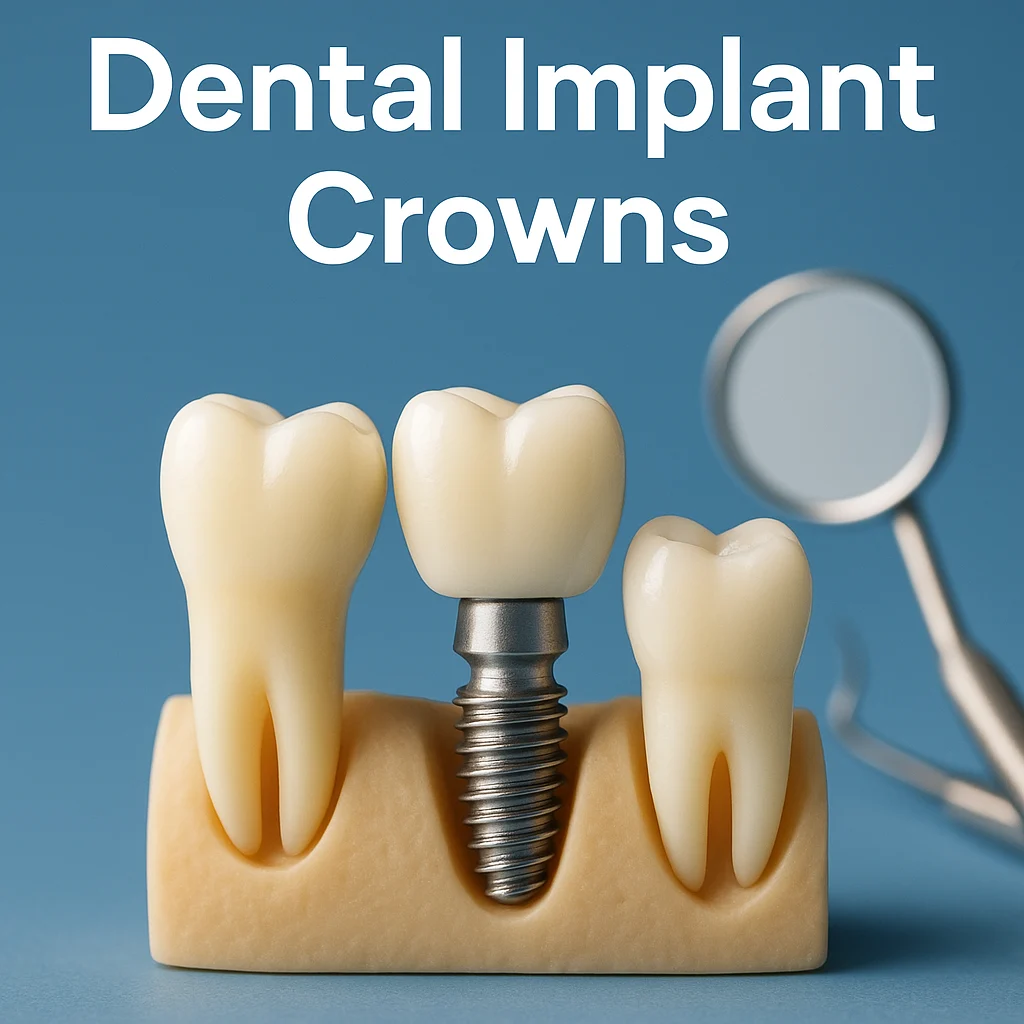
- Implant crown: a crown attached to a dental implant placed in the jawbone. Learn more on our dental implants page.
- Bridge: a fixed replacement that uses crowns on the teeth beside the gap to hold the replacement tooth or teeth in place.
- Removable partial denture: a removable appliance that replaces one or more missing teeth and is taken out for cleaning. It can be a long-term option for some patients, or a step while other treatment is being planned.
What each option needs
An implant crown depends on an implant being placed in the jawbone, so the dentist has to confirm that the site is suitable for planning and healing. A bridge depends on the teeth next to the gap being healthy enough to support it. A partial denture usually depends less on the teeth beside the gap than a bridge does, and it can be a practical choice when someone wants a removable option or a different budget plan.
Cleaning, comfort, and daily maintenance
An implant crown is brushed and cleaned much like a natural tooth, but it still needs careful cleaning around the gumline. A bridge needs extra cleaning around and under the replacement tooth. A partial denture is removed for cleaning and checked over time because gums and bone can change. Comfort is personal: some patients prefer the steady feel of fixed options, while others prefer the flexibility of a removable partial denture.
Typical treatment steps and timeline
Implant treatment usually starts with an exam and planning, then implant placement, healing, and finally the crown. Bridge treatment usually involves preparing the supporting teeth, taking scans or impressions, and fitting the final bridge. Partial dentures are usually planned from impressions or scans, then adjusted after the first fit. Timelines vary, especially if other treatment is needed first.
How current Canadian coverage may affect planning
The Canadian Dental Care Plan can affect affordability and planning even when the clinical choice is still the same. Under the current guide, implant-supported crowns and implant-related procedures are excluded, and bridges and bridge-related procedures are excluded. Removable partial dentures have specific coverage rules and may require preauthorization. That does not make one option medically better, but it can change what is realistic to budget for. A review of patient choices also found that many people know limited details about these options and that cost is often a major factor in refusal, so it is worth asking about coverage early.
When one option may fit better
A bridge may fit better when the teeth beside the gap are healthy enough to support crowns and the goal is a fixed replacement without implant surgery. An implant crown may fit better when you want to avoid preparing the neighbouring teeth and the bone and oral health are suitable for implant planning. A partial denture may fit better when you want a removable option, when more than one tooth is involved, when you need a lower-cost or interim option, or when affordability needs to be part of the plan. None of these choices is automatically the right answer for every mouth, and outcomes depend on case selection, oral hygiene, and follow-up care.
Questions to ask at the exam
- What does each option change about chewing and cleaning?
- What support does my mouth need for an implant, bridge, or partial denture?
- Will the teeth beside the gap be left alone, crowned, or used for support?
- What repairs or maintenance are common over time?
- How do the current coverage rules affect my budget?
If you are in Hamilton and deciding between an implant crown, bridge, or partial denture, an exam can clarify the condition of the neighbouring teeth, the available bone support, and which plan is likely to be easier for you to maintain. Excel Dental can help you compare options in a calm, practical way and build a treatment plan that fits your mouth and goals.
Key sources
This article is for general education only and does not replace personalized advice, diagnosis, or treatment from a licensed dentist.