
Laser Dentistry in Hamilton: What the Evidence Says About Benefits, Limits, and When It Makes Sense
Why patients are hearing more about laser dentistry in Hamilton
Many patients ask about laser dentistry after seeing it mentioned online or in advertisements. Lasers are used in a number of dental procedures, and they can be helpful tools in certain situations. However, they are not automatically better than traditional methods, and they are not appropriate for every procedure.
As a Hamilton dentist who has practiced since 1986, my focus is always on diagnosis, prevention, and choosing the right tool for the right clinical situation. Technology matters, but careful treatment planning and informed decision-making matter more.
What is laser dentistry
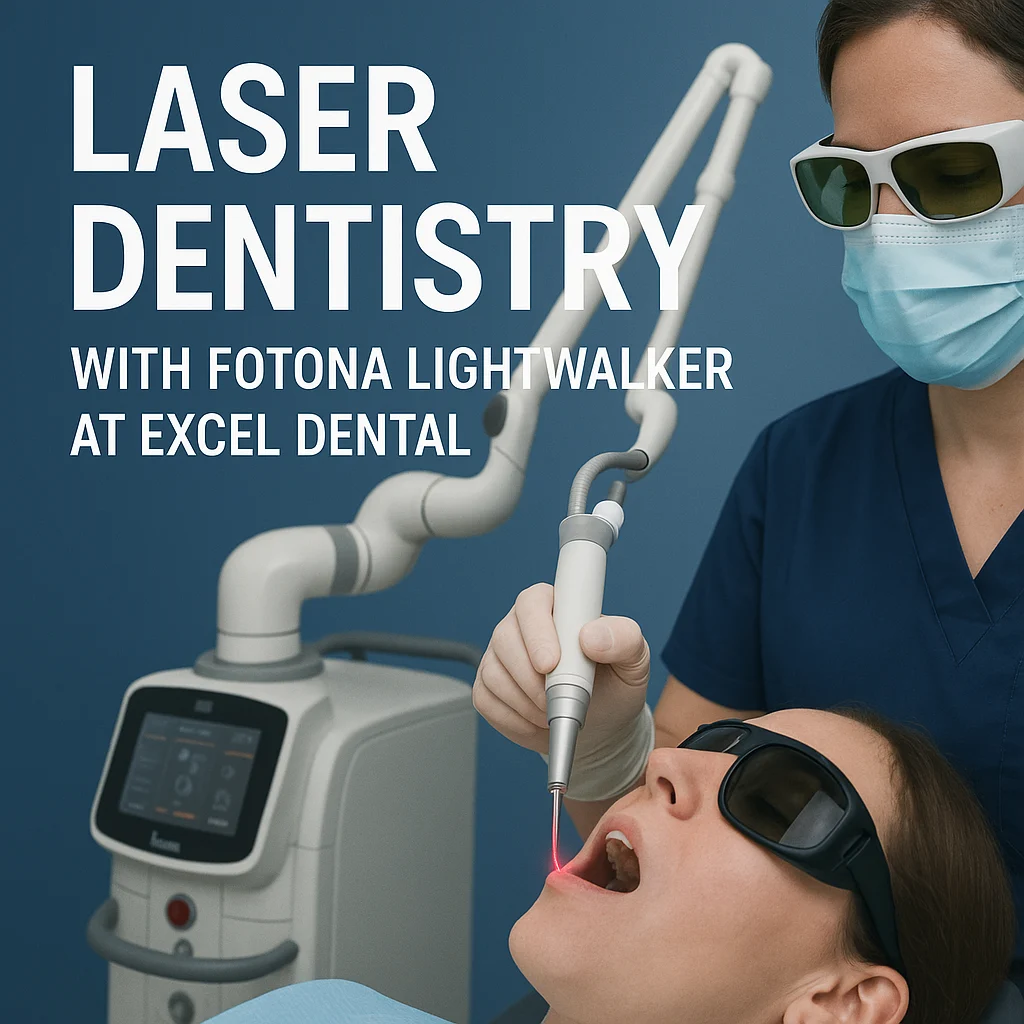
A dental laser produces a focused beam of light energy. Depending on the type of laser and the settings used, that light energy can cut or reshape soft tissue, remove small amounts of hard tissue such as enamel or dentin, or help control bacteria in certain situations.
In general practice, there are two broad categories:
- Soft tissue lasers are used for procedures involving the gums or other soft tissues.
- Hard tissue lasers are designed for use on teeth and bone in selected cases.
Unlike a dental drill, which uses mechanical friction, or a scalpel, which uses a blade, a laser uses light energy to interact with tissue. The clinical effect depends on the wavelength, power settings, and the type of tissue being treated.
Where lasers are commonly used in general practice
In Ontario general dental practice, lasers may be used for:
- Gum reshaping or gingivectomy
- Frenectomy, such as releasing a tight frenum
- Controlling bleeding during certain soft tissue procedures
- Adjunctive use in periodontal therapy
- Selected situations in caries management
They are tools within a broader treatment plan. They do not replace diagnosis, radiographs when indicated, periodontal charting, or conventional scaling and restorative techniques.
What the evidence says about soft tissue procedures
For selected soft tissue procedures, lasers can offer practical advantages. Because lasers can seal small blood vessels as they work, patients may notice less bleeding during certain gum procedures. In some cases, there may be reduced post-operative swelling compared with traditional techniques.
These benefits are related to how laser energy interacts with soft tissue. That said, outcomes depend heavily on proper case selection and operator training. Lasers are not automatically superior in every soft tissue situation, and they are not risk free.
What the evidence says about gum disease treatment
When it comes to periodontal disease, the foundation of care remains scaling and root planing, which is the careful removal of plaque and calculus from below the gumline.
Systematic reviews from Cochrane Oral Health have examined the use of lasers as an adjunct to conventional periodontal therapy. Overall, the evidence suggests that some types of lasers may provide modest additional improvements in certain clinical measures when used alongside scaling and root planing. However, the certainty of evidence is often low to moderate, and lasers are not considered a replacement for conventional mechanical cleaning.
The American Academy of Periodontology has similarly noted that lasers may be used as adjunctive tools in periodontal therapy, but they should not be viewed as stand-alone alternatives to established treatment.
For patients, this means that if a laser is used during gum disease treatment, it is typically part of a comprehensive plan that still includes thorough mechanical debridement and ongoing maintenance.
What the evidence says about cavities and hard tissue
Lasers have also been studied for caries removal and cavity preparation. Research reviewed by Cochrane Oral Health indicates that for many restorative procedures, laser techniques can produce outcomes comparable to conventional drilling in selected cases. However, the evidence does not consistently show that lasers are clinically superior in terms of long-term restoration success.
In practical terms, hard tissue lasers may be appropriate for certain small lesions or for specific clinical goals, but conventional rotary instruments remain the standard of care in most restorative dentistry.
Patients sometimes hear that lasers eliminate the need for local anesthesia. In reality, some procedures may still require anesthetic depending on depth, location, and individual sensitivity. Comfort varies from person to person and from procedure to procedure.
Safety, training, and Ontario regulatory expectations
In Ontario, the Royal College of Dental Surgeons of Ontario sets standards and guidance for dentists. These standards emphasize that dentists must work within their scope of practice, maintain appropriate competence, document care thoroughly, and obtain informed consent.
When introducing technologies such as dental lasers, dentists are expected to ensure they have proper training and that patients receive clear explanations of benefits, risks, alternatives, and costs. Informed consent means understanding not only what a laser can do, but also how it compares with conventional treatment options.
Lasers can cause tissue damage if used improperly. Protective eyewear and strict safety protocols are required. Proper case selection and clinical judgment are essential.
Oral health and overall health: what we know and what we do not
The World Health Organization recognizes oral health as an important part of overall health and wellbeing. Periodontal disease has been associated with systemic conditions such as cardiovascular disease and diabetes. However, most of this evidence is associative rather than proof of direct causation.
Treating gum disease is important for preserving teeth and maintaining oral function. It may also support overall health, particularly in people with diabetes, but it should not be presented as a for systemic conditions.
Laser use does not change these broader principles. The key factors remain early diagnosis, effective plaque control, professional care, and individualized risk assessment.
What patients in Hamilton should consider
If you are considering a procedure that involves a dental laser, it is reasonable to ask:
- What problem are we treating?
- Is the laser being used alone or as an adjunct?
- What are the benefits compared with conventional methods?
- What are the risks and alternatives?
- Will the outcome be different in the long term?
Laser dentistry can be a helpful option in selected situations, especially for certain soft tissue procedures and as an adjunct in periodontal care. For cavities and many restorative treatments, conventional methods remain standard and well supported by evidence.
Ultimately, good dentistry is not defined by the device used. It is defined by careful diagnosis, clear communication, and a treatment plan tailored to the individual. Technology can support that process, but it does not replace clinical judgment or patient-centred care.