
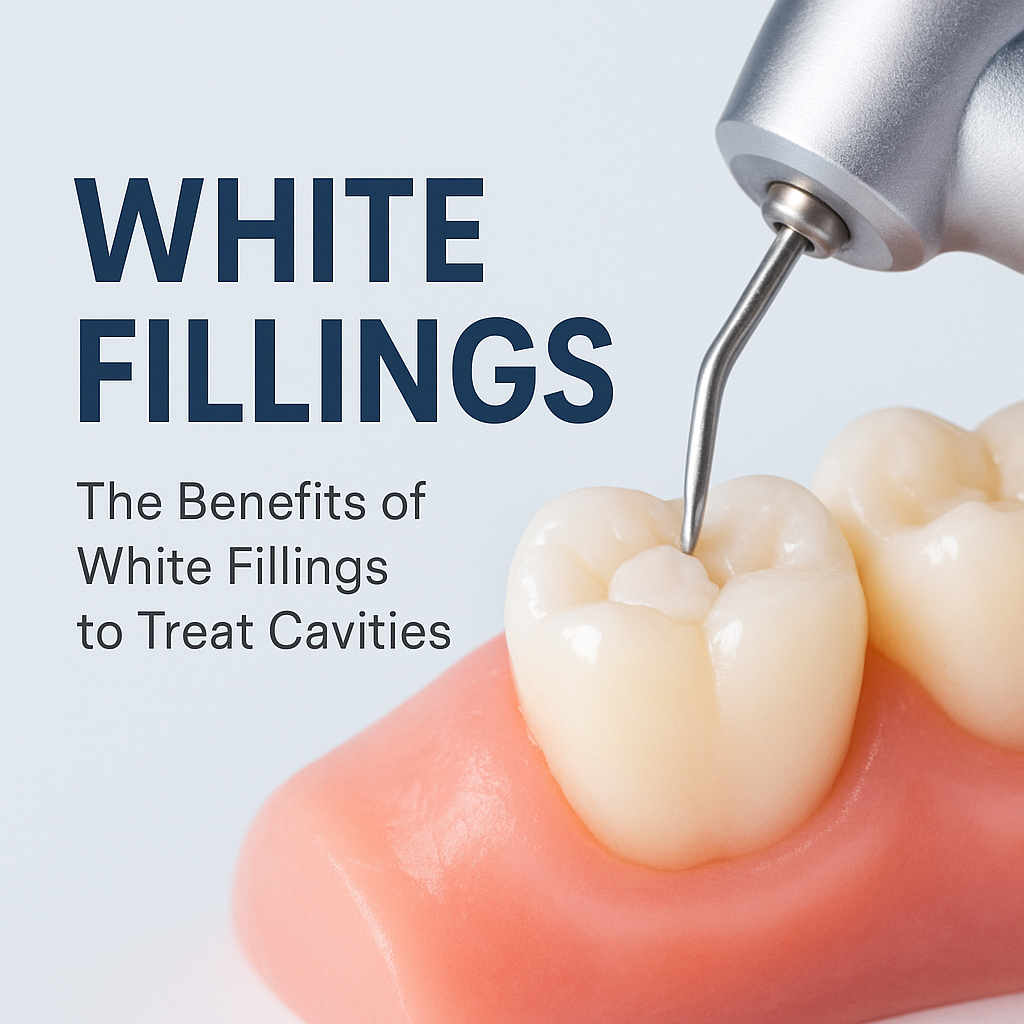
When a Large Filling or Crown Breaks: When Repair May Not Be Enough
Can this tooth be repaired, or does it need a new crown or onlay? With a broken crown or a large filling, the answer depends on how much healthy tooth remains, whether the edges are leaking, and whether the damage is only on the surface or part of a bigger structural problem.
What a dentist looks at first
- How much sound tooth still supports the restoration
- Whether the edge is leaking or has recurrent decay
- Whether the crown or filling has chipped, lifted, or fractured
- Whether the bite is putting heavy force on that tooth
- Whether a crack seems shallow or extends deeper into the tooth
Older restorations do not last forever. Fillings and crowns can need repair, monitoring, or replacement over time.
When a repair may be enough
If the defect is small and the remaining tooth is strong enough, a localized repair may be reasonable. That can mean smoothing a chip, adding material to rebuild a small edge, or resealing a limited margin. A systematic review found that, in selected permanent teeth, repaired restorations did not clearly do worse than replacement, although the evidence was limited and the right choice still depends on the tooth.
When a crown or onlay may be recommended
If too much tooth structure is missing, a patch may not protect the tooth well enough. In that case, a crown or onlay may be recommended to cover and support the tooth more broadly. A crown covers the whole visible tooth. An onlay, sometimes called a partial crown, covers more than a filling but less than a full crown.
Recent review evidence suggests onlays can be a conservative option for some back teeth, but the studies pooled different materials and follow-up times. That is one reason treatment planning is case by case rather than one-size-fits-all.
For a plain-language overview of full coverage treatment, see our crowns page.
What cracked tooth symptoms can feel like
Pain on biting, sensitivity to hot or cold, or discomfort that comes and goes can happen with a crack. But symptoms alone do not show how deep the crack is, and they do not confirm whether repair, onlay, or full crown treatment is the right choice. The exam matters.
When to call sooner
- A crown feels loose or has come off
- A filling breaks after chewing
- Food keeps packing into the area
- You notice pain on biting
- Sensitivity is getting worse
- There is swelling or a bad taste near the tooth
These signs do not prove a specific diagnosis, but they do mean the tooth should be examined soon.
A calm next step in Hamilton
If you’re in Hamilton, Excel Dental can assess a broken crown or large filling, explain what the tooth can still support, and discuss whether repair, an onlay, or a full crown is the more practical next step.
Key sources
This article is for general education only and does not replace personalized advice, diagnosis, or treatment from a licensed dentist.