
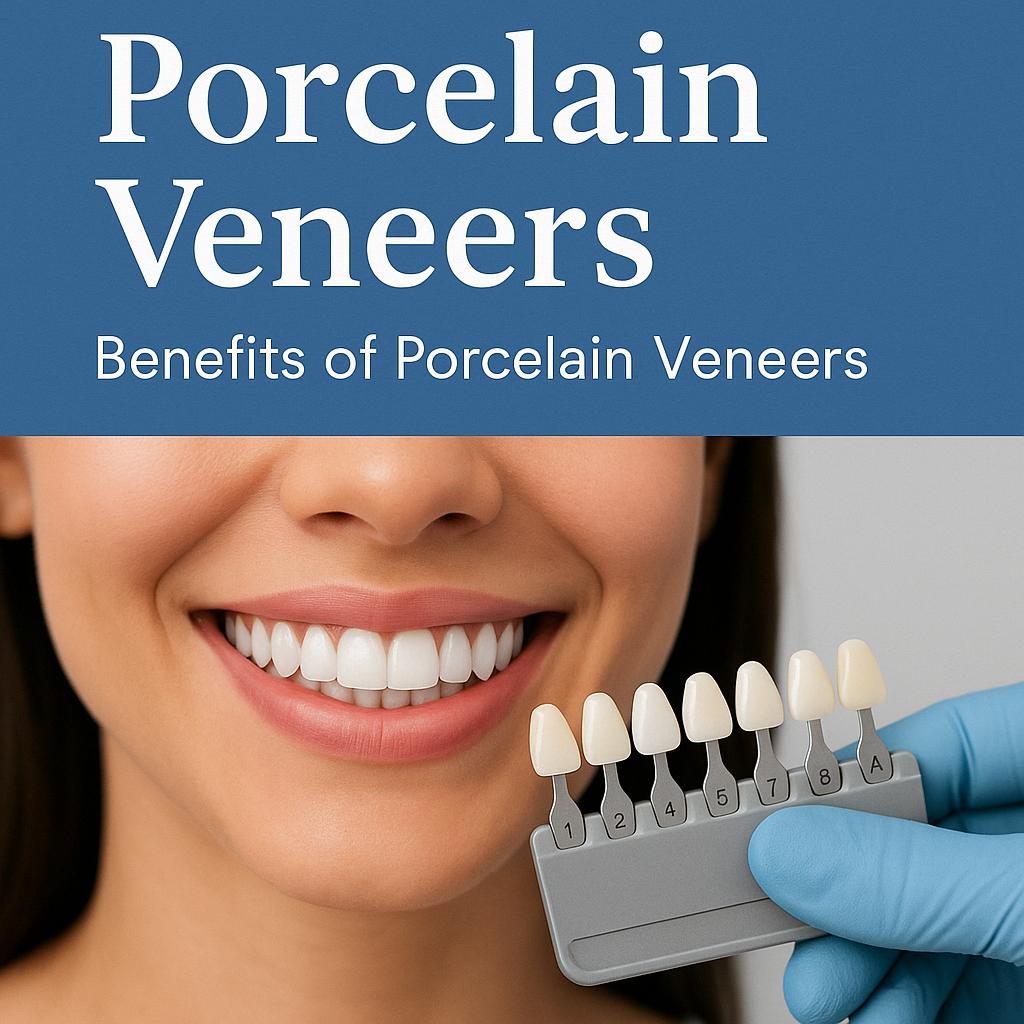
Porcelain veneer consultation: what affects the plan?
Thinking about porcelain veneers? The consultation is where the real planning happens. Two front teeth that look similar can still need different treatment if one has more enamel, an old filling, early decay, wear from grinding, or gum inflammation. That is why veneer planning is individualized rather than one-size-fits-all.
Why veneer consultations are individualized
A veneer plan is based on the condition of each tooth, not just the smile as a whole. Your dentist may recommend different approaches for different teeth in the same mouth if one tooth is healthy and another has more wear, filling work, or enamel loss.
The goal is to choose the least invasive option that still fits the tooth and the way it functions.
What dentists check first: enamel, decay, and gum health
Porcelain veneers usually bond best to healthy enamel. During a consultation, a dentist will look for active decay, leaking fillings, cracks, and how much natural tooth structure is left. Gum health matters too, because inflammation or active periodontal disease can change both the timing and the plan.
The Canadian Dental Association notes that veneer planning depends on the tooth surface available for bonding. Recent review evidence also supports the idea that enamel is an important substrate for predictable bonding.
How bite, clenching, and grinding affect the plan
Strong bite forces, clenching, and grinding do not automatically rule out veneers, but they can change the design, the material choice, or whether another treatment is more appropriate. Veneers do not treat grinding itself. If the teeth are under high force, your dentist may discuss ways to protect the restorations and reduce the chance of chipping or early wear.
This is one reason a consultation should include a careful bite check, not just a look at colour and shape.
Porcelain veneers vs composite bonding: why the choice changes
Porcelain veneers and direct composite bonding can both improve colour, shape, and small chips. Porcelain may be a good fit when a tooth has enough healthy structure for a lab-made restoration, while composite can sometimes be a more conservative option because it may preserve more tooth structure.
Longer-term studies show that both approaches can perform well in selected cases, but the better fit depends on the tooth, the bite, the amount of enamel left, and maintenance over time. Neither option is automatically best for every patient.
If you want to compare these options in more detail, our porcelain veneers page is a helpful starting point before a consultation.
When another treatment may be better
Sometimes whitening first is the simplest answer if the main concern is shade. If spacing or alignment is the main issue, orthodontic treatment may preserve more tooth structure than covering the teeth. If a tooth has a large filling, heavy wear, or too little healthy structure left for a veneer to hold well, a crown may be discussed instead.
The point is not to force a veneer plan onto every smile. It is to match the treatment to the tooth.
Questions to ask about risks, longevity, maintenance, and cost
Ontario consent rules say patients should understand the benefits, risks, alternatives, the likely result without treatment, and the cost before agreeing to care. A veneer consultation is a good time to ask:
- Which teeth are good veneer candidates, and which are not?
- Do I have enough enamel for predictable bonding?
- Are there signs of grinding or bite stress?
- What are the alternatives, including whitening, bonding, orthodontics, or a crown?
- What maintenance will the restorations need?
- What could happen if I choose to wait?
- What is the full cost of the plan?
Those questions help turn a cosmetic visit into a clear treatment plan.
Coverage and budgeting in Canada
Coverage can affect the plan as much as the dentistry itself. The Government of Canada’s CDCP benefits guide excludes cosmetic dental services, including cosmetic veneers, so this treatment is generally not covered under that program. If you are comparing options, it helps to ask about total cost and whether any part of the plan is likely to be self-funded.
Next step for patients in Hamilton
If you are considering veneers in Hamilton, a consultation can help you compare porcelain, composite bonding, whitening, orthodontic movement, or crown options based on the teeth in front of you. The right plan is the one that balances appearance, tooth preservation, bite function, maintenance, and budget.
If you are ready to explore whether veneers are a good fit, start with a personalized assessment and a clear discussion of the options.
Key sources
- Canadian Dental Association veneer and bonding guidance
- Government of Canada: CDCP Dental Benefits Guide
- 2024 review of ceramic veneer bonding substrates
This article is for general education only and does not replace personalized advice, diagnosis, or treatment from a licensed dentist.