
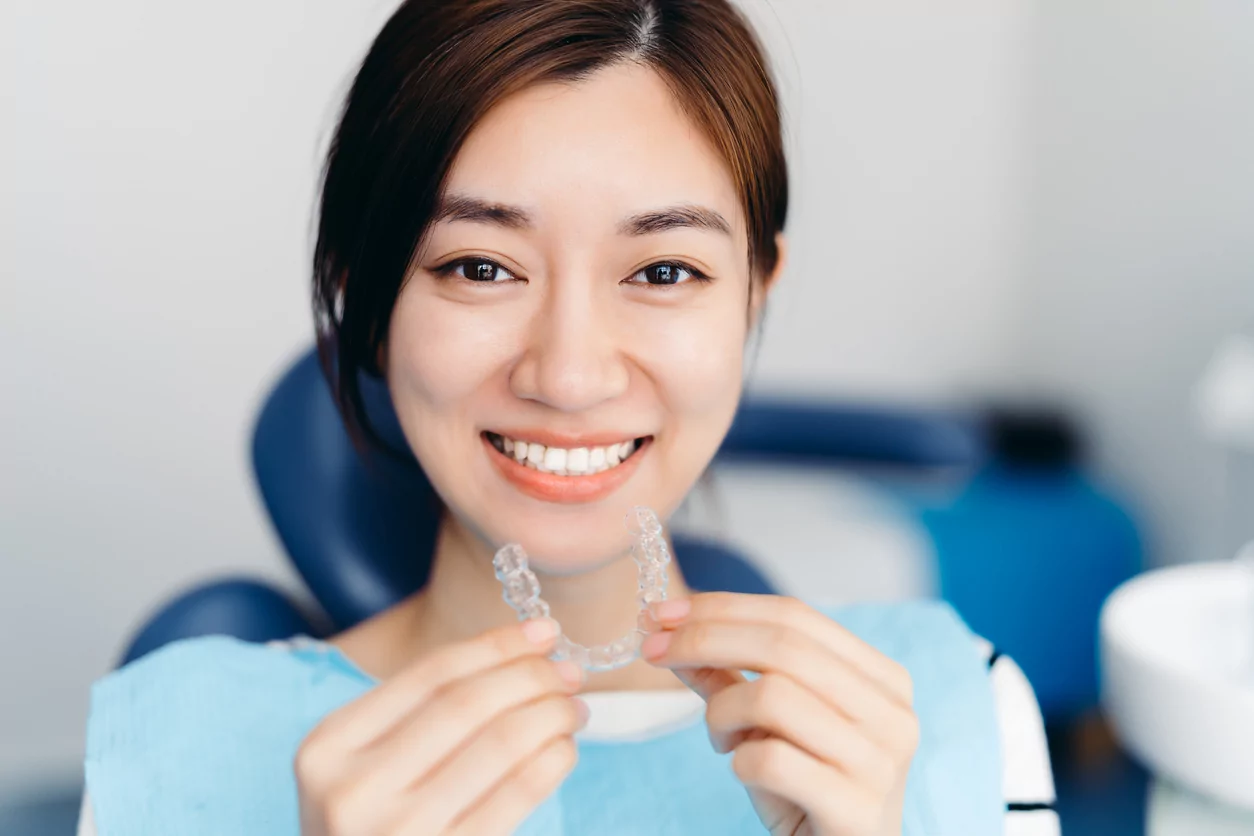
Invisalign or Braces in Hamilton: Who Is a Good Candidate for Clear Aligners in 2026?
Clear aligners such as Invisalign can be a very good option for many patients, but not for everyone. In general, a strong aligner candidate is someone with the right kind of bite and tooth movement needs, healthy teeth and gums, and the discipline to wear trays as directed every day. For some mild to moderate cases, especially many non-extraction cases, aligners can work well. But braces may still be the more predictable choice for certain complex bite problems, difficult tooth movements, or patients who are unlikely to wear aligners consistently. The important question is not whether aligners are popular. It is whether they fit your diagnosis, health, and daily habits.
How clear aligners work in real life
Clear aligners are custom plastic trays that move teeth in small steps. According to the American Association of Orthodontists aligners guide, they are typically worn at least 22 hours a day and removed for eating, drinking anything other than water, brushing, and flossing.
That daily routine matters more than many people expect. If trays are left out too often, teeth may not track as planned. That can lead to delays, additional aligners, or changes to the treatment plan.
It also helps to know that aligner treatment often includes small tooth-coloured attachments bonded to teeth, elastics for bite correction, and follow-up scans or refinements. These are common parts of treatment, not signs that something has gone wrong.
Who often fits clear aligners well
Many adults and teens with mild to moderate crowding or spacing can be good candidates for aligners. This is especially true when the treatment goals are straightforward and the case does not require highly complex tooth movement.
A recent Journal of Evidence-Based Dental Practice review found that, for simple malocclusions treated on a non-extraction basis, clear aligners and fixed braces performed similarly on several orthodontic outcome measures. The same review also found lower plaque, gingival, and bleeding index scores with aligners in the included studies, and somewhat better quality-of-life findings during treatment. That may make sense in daily life, because aligners are removable for brushing and flossing.
Still, removable does not automatically mean easier. The best aligner candidate is usually someone who is organized, motivated, and realistic about the work involved.
In many consults, aligners make the most sense when a patient:
- Has mild to moderate crowding or spacing
- Has treatment goals that do not require the most difficult tooth movements
- Can commit to near-full-time wear every day
- Has good home care habits
- Understands that refinements and retainers may still be part of the process
When braces may be more predictable
Clear aligners are not automatically the best tool for every bite problem. The same Journal of Evidence-Based Dental Practice review concluded that overall evidence quality is still low, and that better studies are still needed, especially for more complex cases.
The American Association of Orthodontists also notes that some cases are treated more predictably with braces. In practical terms, braces may still be preferred when a case needs very precise control, more difficult root movement, significant bite correction, or treatment that depends less on day-to-day patient wear.
Examples that may push a case toward braces or orthodontic specialist input can include:
- More complex bite discrepancies
- Tooth movements that need very exact control
- Cases where extractions may be part of treatment planning
- Patients with inconsistent tray wear habits
- Situations where growth, jaw relationships, or airway and facial balance need closer orthodontic assessment
This does not mean aligners cannot be used in more advanced cases. It means the diagnosis and treatment plan need to be especially careful, and sometimes braces or specialist treatment may offer a more dependable path.
Candidacy is not just about appearance
One of the biggest misconceptions about Invisalign is that it is mainly a cosmetic decision. In reality, candidacy depends on health as much as appearance.
Before starting aligners, your dentist or orthodontist should look at the full picture, including:
- Current gum health
- Active cavities or leaking fillings
- Bone support around the teeth
- Oral hygiene habits
- The way the upper and lower teeth fit together
- Jaw growth stage in younger patients
- Signs of clenching, grinding, or tooth wear
If gums are inflamed, plaque control is poor, or decay is active, those problems usually need attention first. Moving teeth in an unhealthy environment is not good planning.
For children and teens, growth stage also matters. Some young patients are excellent aligner candidates, but not all. In other cases, braces, growth-guidance treatment, or referral to an orthodontist may be more appropriate.
The commitment that matters most
Brand name matters less than diagnosis, case design, and follow-through. Successful aligner treatment depends heavily on patient cooperation.
That usually means:
- Wearing aligners about 22 hours a day
- Changing trays on schedule
- Keeping regular review appointments
- Using attachments or elastics if prescribed
- Cleaning teeth carefully before putting trays back in
- Reporting poor fit, breakage, or lost trays early
Refinements are also common. A refinement is an additional set of aligners used to improve details at the end or middle of treatment. This is not unusual and should be discussed before treatment starts so expectations stay realistic.
Hamilton and Ontario questions families should ask early
For Hamilton patients and families, the practical side matters too. In Ontario, treatment discussions should include informed consent, reasonable alternatives, known limitations, likely risks, costs, and what happens if the original plan changes.
The Royal College of Dental Surgeons of Ontario approved a new Consent to Treatment standard in 2025. The RCDSO has also published practice advice on constructive conversations with patients, reminding dentists to provide evidence-based information about all reasonably available treatment options and to document informed consent or informed refusal in the chart.
That is important for orthodontic decisions. A good consult should compare aligners, braces, and referral options when relevant. It should not feel like a sales pitch for one appliance.
Cost and coverage should also be discussed early. Coverage varies widely by private plan. For families looking at public programs, Healthy Smiles Ontario helps eligible children and teens access many dental services, but orthodontic treatment should not be assumed to be covered. The Ontario government’s Healthy Smiles Ontario information is a good place to start when checking eligibility and covered services.
Finally, ask about retention before treatment begins. Teeth can shift after orthodontic treatment whether you choose aligners or braces. Retainers are a normal part of long-term care, not an optional extra for most patients.
Questions to ask before starting Invisalign or another clear aligner system
- Am I a good aligner candidate based on my bite, not just the appearance of my front teeth?
- Would braces be more predictable for any part of my case?
- Do I need fillings, periodontal care, or other treatment before orthodontics?
- Will I likely need attachments, elastics, or refinements?
- How many hours a day do I need to wear the trays?
- What happens if I do not wear them enough?
- What is included in the total fee, and what could cost extra?
- What type of retainer will I need after treatment?
- If treatment goals change, what are my alternatives?
- Should I see an orthodontist for this specific case?
The bottom line
Invisalign and other clear aligners can be an excellent choice for the right patient, but they are not a universal replacement for braces. Mild to moderate crowding or spacing, healthy gums and teeth, and strong daily wear habits often make aligners a good fit. More complex movements, certain bite corrections, and inconsistent wear habits may point toward braces or specialist input instead.
If you are deciding between aligners and braces, the most useful next step is a thorough exam that looks at your oral health, your bite, your treatment goals, and your ability to follow the plan day to day. The best consultation should help you understand your options clearly so you can choose the one that makes the most sense for your health, function, comfort, and smile.
Sources
- Journal of Evidence-Based Dental Practice review on clear aligners
- American Association of Orthodontists clear aligners guide
- RCDSO Council Highlights on Consent to Treatment standard
- RCDSO practice advice on constructive conversations with patients
- Healthy Smiles Ontario coverage page
- Services covered by Healthy Smiles Ontario
- Align Technology mandibular advancement availability update
- Pubmed
- Pubmed