
Should Whitening Come Before Bonding or Veneers?
If you are planning both whitening and cosmetic restorations, the usual answer is that whitening comes first. Bonding and veneers are matched to the shade of the teeth at the time they are made, so whitening first gives the dentist a more stable color target.
Quick answer
Whitening often comes before bonding or veneers so the final tooth shade can be set first. If whitening is done after a filling, bonding, crown, denture, or veneer is already in place, that restoration usually will not lighten with the natural tooth.
Why the order matters for color matching
Natural enamel can lighten with bleaching, but restorative materials generally do not change color in the same way. That means a tooth can end up lighter than a nearby restoration if whitening is done later.
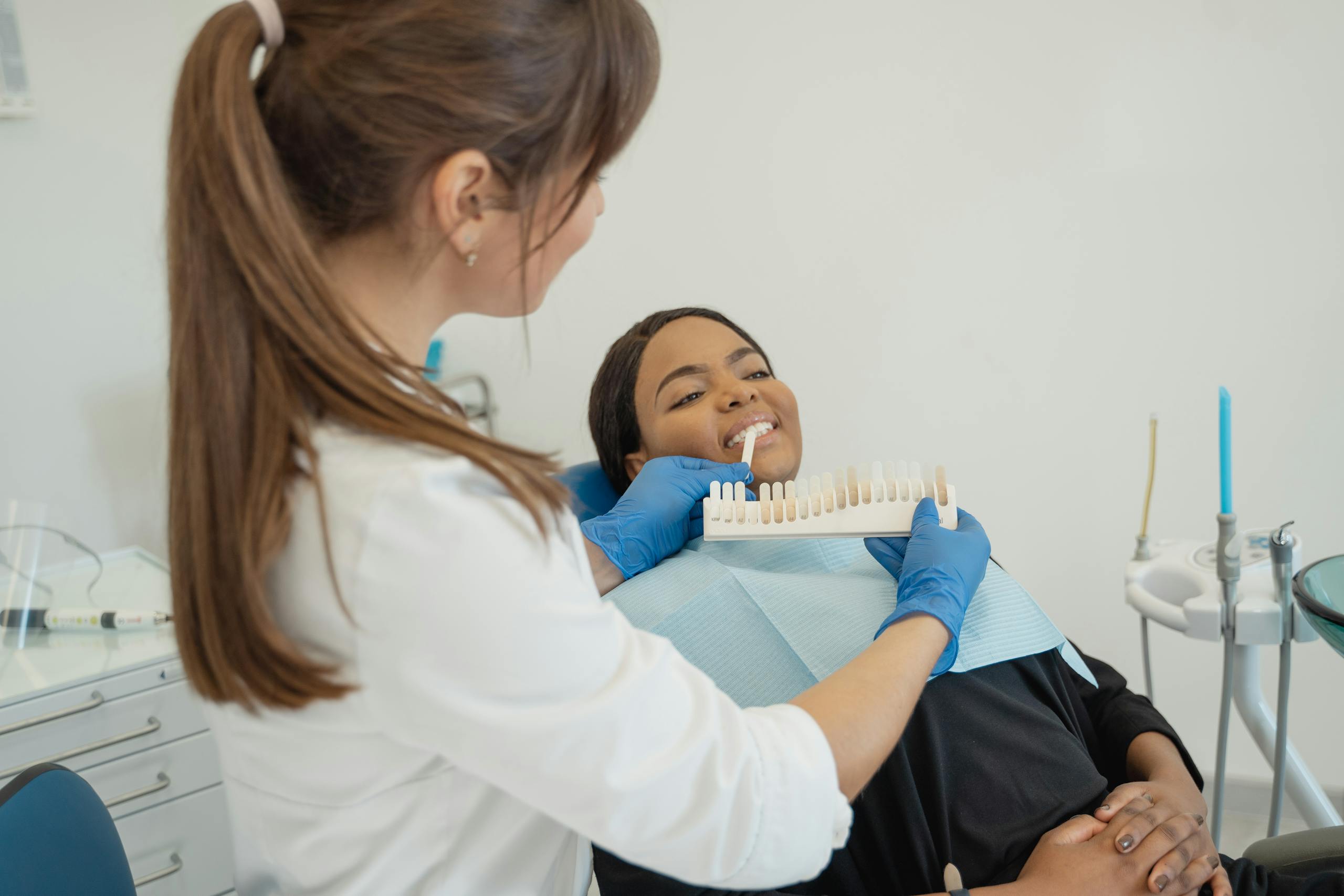
For visible front-tooth work, a dentist will often want the shade settled first and then match composite bonding or porcelain veneers to that result.
What whitening changes, and what it does not
Whitening changes the color of natural tooth structure. It does not whiten existing restorations such as fillings, crowns, dentures, bonding, or veneers.
If you already have visible restorations, whitening first may mean those restorations need to be replaced later so they blend in with the lighter teeth. That is not always necessary, but it should be discussed before treatment starts.
When cosmetic treatment should wait
Sometimes whitening is not the first step. If there is active decay, inflamed gums, demineralization, tooth sensitivity, enamel loss, or heavy wear from grinding or clenching, your dentist may recommend treating those issues first.
Healthy teeth and gums give the dentist a better foundation for cosmetic planning, and they also help reduce the chance that whitening or restorative treatment will be uncomfortable or short-lived.
Bruxism matters too. Ongoing grinding can chip bonding and put extra stress on veneers, so the bite may need to be assessed before cosmetic work is finalized.
Bonding vs. veneers after whitening
Bonding and veneers are both planned around shade, but they are not the same treatment.
- Bonding is usually more conservative and can be a good choice for small shape or color changes.
- Veneers are often used when more change is needed, but porcelain veneers are usually irreversible because some enamel is removed to place them.
Neither option is chosen on appearance alone. Tooth structure, gum health, bite forces, and your goals for the smile all matter.
There is not one universal waiting period after whitening before bonding or veneers. Your dentist may want the shade to settle before final color matching, but the timing is clinician-dependent.
Questions to ask at a cosmetic visit
- Should whitening happen before we choose the final restoration shade?
- Do any of my visible fillings or other restorations need to be replaced if I whiten first?
- Is my gum health ready for bonding or veneers now?
- Would grinding or clenching change which option fits best?
- Is there any decay, wear, or sensitivity that should be treated before cosmetic work?
If you are in Hamilton and comparing whitening, bonding, or veneers, Excel Dental can help you review the sequence, ask practical questions, and decide what should happen first for your mouth. Learn more on our cosmetic dentistry page.
Key sources
- Canadian Dental Association — Tooth Bleaching and Whitening
- American Dental Association — Whitening
- Systematic Review — Color Change of Resin-based Composites After In Vitro Bleaching Protocols
This article is for general education only and does not replace personalized advice, diagnosis, or treatment from a licensed dentist.