
Missing Teeth in 2026: What the Canadian Dental Care Plan Covers, and How to Choose Between Dentures, Bridges, and Implants
Why this question matters in 2026
Missing teeth can affect more than appearance. Depending on where the gap is, patients may notice trouble chewing, changes in speech, drifting of nearby teeth, sore spots from uneven biting, or reduced confidence with social eating and smiling.
In 2026, many patients are also asking a second question at the same time: what will public dental coverage actually help pay for? That is especially relevant for families comparing treatment options under the Canadian Dental Care Plan, or CDCP, and for Ontario families looking at provincial programs such as Healthy Smiles Ontario.
It is important to separate two different decisions. The first is whether a service may be covered. The second is which treatment is most appropriate for your mouth, your health, and your long-term goals. Those are related questions, but they are not the same question.
What CDCP may cover and what it generally excludes
According to the current Canadian Dental Care Plan Coverage overview and the Canadian Dental Care Plan Dental Benefits Guide, CDCP may include some major restorative and removable prosthodontic services for eligible patients. That can include crowns in selected situations, complete dentures, denture repairs, relines, rebases, and some immediate or overdenture services. However, many of these services have criteria, frequency limits, or preauthorization requirements.
That means coverage is not automatic. A crown, partial denture, or other major service may still need documentation, clinical justification, and approval before treatment. The CDCP Dental Benefits Guide also makes clear that treatment decisions are based on the patient’s oral condition and plan rules, not simply on what is requested.
Just as important, the same federal guide states that fixed prosthodontics, including bridges and bridge-related procedures, are exclusions under CDCP. It also states that implant-supported crowns, complete or partial dentures supported by implants, and all implant-related procedures are excluded.
For Ontario families, coverage also depends on the specific public program. Healthy Smiles Ontario is an important children’s program, but the Ontario government states that it does not cover dental implants. So when families compare options, it helps to confirm the exact plan, age eligibility, and service rules before assuming a treatment will be funded.
In practice, coverage can help narrow the conversation, but it should not replace an examination and treatment plan.
Option 1: removable dentures
A removable denture replaces missing teeth with a prosthesis that can be taken out for cleaning. It may be a partial denture if some natural teeth remain, or a complete denture if all teeth in an arch are missing.
For many patients, dentures are the most practical lower-cost way to replace several missing teeth. They can restore appearance, provide some chewing function, and often require less surgery and less upfront cost than implant-based care.
That said, dentures have trade-offs. They may move during eating or speaking, especially lower dentures. They can create sore spots, may need adjustments, and often need relines, repairs, or replacement over time as the mouth changes. Some patients adapt very well. Others find them difficult to tolerate, particularly in the lower jaw.
When several teeth are missing, or when neighboring teeth are not strong candidates to support a fixed option, a removable partial denture may still be a sensible and conservative choice. It can also be used as an interim option while a patient stabilizes gum health, completes extractions, or decides on longer-term care.
Option 2: fixed bridges
A fixed bridge replaces one or more missing teeth by attaching an artificial tooth to supporting teeth on either side. The Canadian Dental Association explains that a bridge is a fixed dental prosthesis used to replace missing teeth when conditions are appropriate.
Bridges appeal to many patients because they do not come in and out. They can feel more natural than a removable appliance and may restore chewing efficiently when well planned.
However, a bridge is not a simple yes or no choice. The supporting teeth need to be healthy enough, well positioned, and strong enough to carry the load. In many cases, those neighboring teeth need to be reshaped for crowns. That may be quite reasonable if those teeth already need large restorations or crowns. It may be less attractive if the neighboring teeth are healthy and untouched.
Bridges also need cleaning under and around them every day. If plaque control is difficult, the risk of decay or gum problems around the supporting teeth can rise. For some patients, that makes a bridge less ideal than it first appears.
One practical point for 2026 is that clinical suitability and coverage are very different here. A bridge may be a good dental choice in the right case, but CDCP generally excludes fixed prosthodontics and bridge-related procedures.
Option 3: implant-based replacements
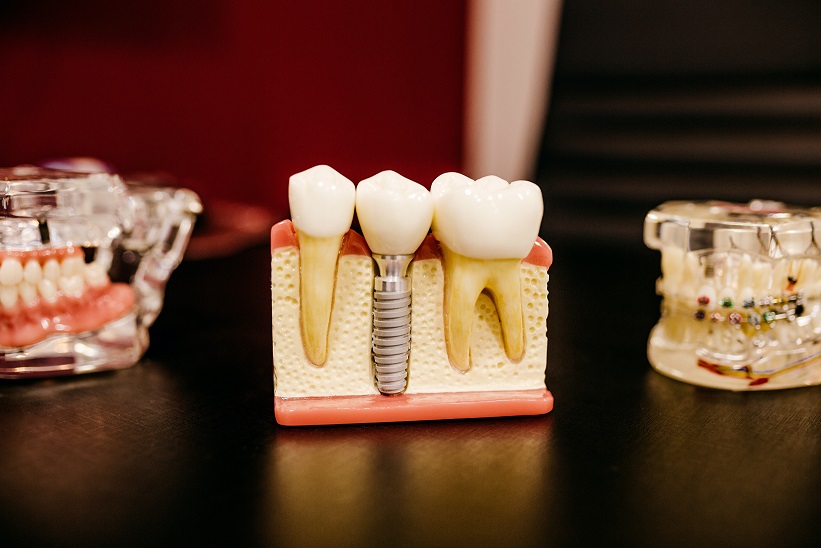
Implant-based treatment replaces the root of a missing tooth with a titanium implant placed in bone. The final restoration may be a single crown, an implant-supported bridge, or an implant-retained denture.
The main advantage is that implants do not rely on neighboring teeth for support. In selected patients, they can offer very good stability and function. They can also help with denture retention, especially when a lower denture is loose and frustrating to wear.
But implants are not the right answer for everyone. They require surgery, healing time, adequate bone support, and careful home care. Some patients also need bone grafting or other preparatory procedures. Even when implants integrate well, they are not maintenance-free. The journal review Prosthetic Failures in Dental Implant Therapy highlights an important counselling point: high survival rates do not mean there are no repairs, technical complications, or upkeep needs over time.
For complete lower dentures, the evidence is especially helpful. The Mandibular 2-Implant Overdenture Meta-analysis supports a careful statement that lower implant-retained overdentures often improve patient satisfaction and oral health-related quality of life compared with conventional dentures. That is a meaningful benefit for selected patients. At the same time, better chewing comfort or satisfaction does not automatically mean measurable improvement in nutrition, and the evidence there is more limited.
From a coverage standpoint, patients should know this clearly: under the current CDCP guidance, implant-supported crowns and all implant-related procedures are generally excluded. So an implant may still be a clinically sound option, but it often involves substantial out-of-pocket cost.
How dentists decide which option may fit
Choosing between a denture, bridge, or implant is not just about replacing a gap. It is about protecting the rest of the mouth as well.
In treatment planning, dentists usually look at several factors together:
- How many teeth are missing, and where they are missing
- The health of the gums and supporting bone
- The condition of neighboring teeth
- Your bite forces and whether you clench or grind
- How easy daily cleaning is likely to be
- Your comfort preferences, including whether a removable appliance feels acceptable
- Whether surgery is appropriate for your health and goals
- Budget, coverage, and expected maintenance over time
For example, a bridge may make sense when the teeth beside the gap already need crowns and can predictably support the restoration. A removable partial denture may be more practical when several teeth are missing or when a lower-cost option is needed. An implant may be attractive when the neighboring teeth are healthy and should be left untouched, or when denture retention is a major problem and the patient is comfortable with surgery and additional cost.
Sometimes the best answer is staged treatment. That may mean starting with disease control, extractions, or a temporary appliance, then revisiting a definitive plan once healing, comfort, and finances are clearer.
Questions to ask at your next dental visit
If you are comparing replacement options, these questions can help guide the discussion:
- What are the realistic options for my specific missing tooth or teeth?
- Which option best protects the neighboring teeth?
- How will this choice affect chewing, comfort, and cleaning?
- Do I have enough bone and gum support for an implant-based option?
- Would a bridge require preparing healthy teeth?
- How often do dentures like this usually need adjustment, relining, or replacement?
- What maintenance should I expect over the next several years?
- Which parts, if any, may be covered by CDCP or another public plan, and which costs are likely to be out of pocket?
- Would imaging or additional records change the recommendation?
Bottom line
For patients in Hamilton and across Canada, missing-tooth treatment in 2026 often comes down to two truths. First, coverage matters. Second, personalized treatment planning matters more.
Dentures, bridges, and implant-based options each have real strengths, real limits, and real maintenance needs. CDCP may help with some denture and major restorative services in eligible cases, often with criteria or preauthorization, but bridges and implant-related procedures are generally excluded. That makes it especially important not to choose by coverage alone.
The best replacement option depends on an in-person examination, updated imaging when needed, the condition of nearby teeth and gums, and an honest discussion about comfort, cleaning, function, and budget. A thoughtful plan should fit the whole patient, not just the space where the tooth is missing.
Sources
- Canadian Dental Care Plan Dental Benefits Guide
- Canadian Dental Care Plan Coverage
- Healthy Smiles Ontario Coverage
- Canadian Dental Association Bridges
- Mandibular 2-Implant Overdenture Meta-analysis
- Prosthetic Failures in Dental Implant Therapy
- CDCP Renewal Season Opens April 15
- Implant Overdentures and Quality of Life Study
- Canada
- Canada
- Canada
- Cda Adc
This article is for general education only and does not replace personalized advice, diagnosis, or treatment from a licensed dentist.