
Missing a Tooth or a Few Teeth? How Implants, Bridges, and Dentures Compare
Losing one tooth or a few teeth can affect chewing, bite balance, speech, and how easy it is to keep the area clean. The best replacement is not always the most complex one. It depends on the size and location of the gap, the health of the neighbouring teeth, the support from bone and gums, and what matters most to the patient: a fixed result, a removable option, timing, or cost.
The three common replacement choices
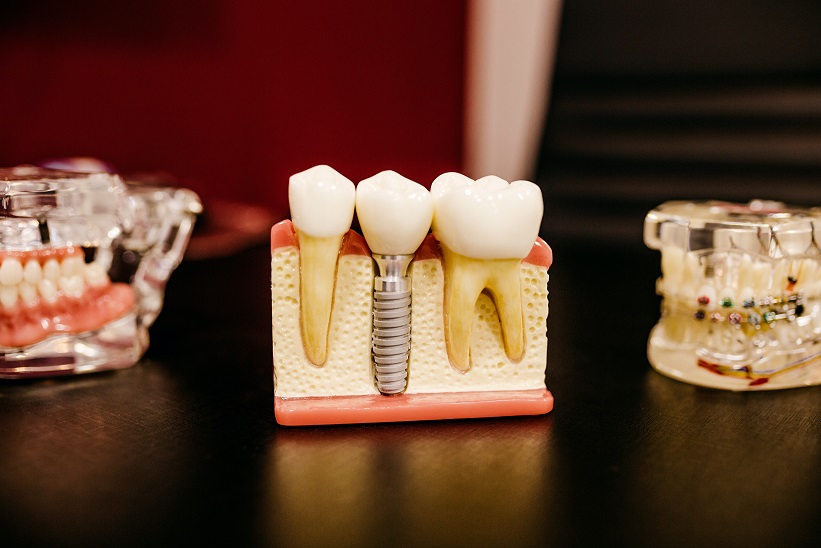
Implant with crown: an implant is placed in the bone, then topped with a crown that looks and functions like a tooth. This may be a good option when one tooth is missing or when a patient wants to avoid changing the teeth beside the space. It still depends on healthy gums, enough bone for planning, and time to heal. Bone grafting is sometimes discussed, but it is not needed in every case.
Tooth-supported bridge: a bridge uses the teeth next to the space as anchors. It can be a practical choice when those nearby teeth already need crowns or when a fixed replacement is preferred. Because the neighbouring teeth are involved, a bridge is not the same choice as an implant, even when both can replace a single missing tooth.
Removable partial denture: a partial denture replaces one or more missing teeth with a removable appliance. It is usually less invasive than fixed treatment and may be the more practical choice when several teeth are missing, when surgery is not desired, or when budget matters. A partial denture needs daily cleaning and may feel bulkier than a fixed option.
When one missing tooth versus several changes the plan
One missing tooth often opens the door to either an implant or a bridge. Several nearby missing teeth can change the balance. In that situation, a partial denture may be easier to use, while some patients may still be candidates for more than one implant or for a bridge that spans the space. The number of missing teeth is only one part of the picture; the bite and the condition of the remaining teeth matter just as much.
Why the teeth beside the space matter for a bridge
A bridge depends on the teeth next to the gap. If those teeth are healthy and untouched, a bridge means preparing them so they can support the replacement tooth. If those teeth already need crowns or have large fillings, a bridge may make more sense. If they are strong and healthy, some patients prefer to keep them untouched and consider an implant instead.
Why bone, gum health, and healing time matter for implants
Implant planning starts with the bone and gums. The bone has to be strong enough to support the implant, and the surrounding gums need to be healthy enough to heal well. That is why dentists often check the site carefully before recommending this option. Healing time also matters, because implants are usually planned in stages rather than all at once. For a closer look at that option, see our page on dental implants.
When a removable partial denture may be the practical choice
A partial denture can be the most practical option when the goal is to replace several teeth without surgery. It is removable, which makes cleaning easier in some situations, and it can be adjusted if the mouth changes over time. It may also fit better when coverage or budget makes fixed treatment harder to manage. A removable option is not the same as a fixed one, but that does not make it a poor choice. For many patients, it is the most realistic place to start.
How dentists compare the options
- How many teeth are missing and where the space is in the mouth
- How healthy the neighbouring teeth are and whether they already need crowns
- Bone support and gum health at the missing-tooth site
- The bite and how the replacement will meet the opposing teeth
- Timeline for healing, appointments, and daily function
- Cleaning and maintenance over the long term
- Cost and coverage, including what may be covered now and what may be out of pocket
Research reviews support this kind of individualized planning. No single option is best for every mouth. Factors such as the condition of nearby teeth, cost, patient preference, and treatment tolerance all affect which plan is the best fit.
What Canadian coverage may change
The Canadian Dental Care Plan currently covers partial and complete dentures, but the plan has limits and preauthorization rules in some cases. Fixed bridges and implant-related procedures are excluded. Because eligibility, documentation, frequency limits, and out-of-pocket costs can change, it is worth confirming the current rules before you commit to a treatment plan.
If you are comparing a few options, it can help to think in plain terms: an implant replaces the tooth without using the neighbours, a bridge uses the teeth beside the space, and a partial denture stays removable. The best choice depends on the mouth in front of you, not on a generic ad.
A calm next step in Hamilton
If you are in Hamilton and trying to sort out implants, bridges, or dentures, an exam can make the decision much clearer. At Excel Dental, we can look at the space, the neighbouring teeth, gum health, and the bite, then talk through coverage questions and timing. If you would like to review your options, you can book a consultation.
Key sources
- Government of Canada: CDCP Dental Benefits Guide
- Canadian Dental Association: Dentures
- Prosthetic rehabilitation of partially dentate or edentulous patients
This article is for general education only and does not replace personalized advice, diagnosis, or treatment from a licensed dentist.