
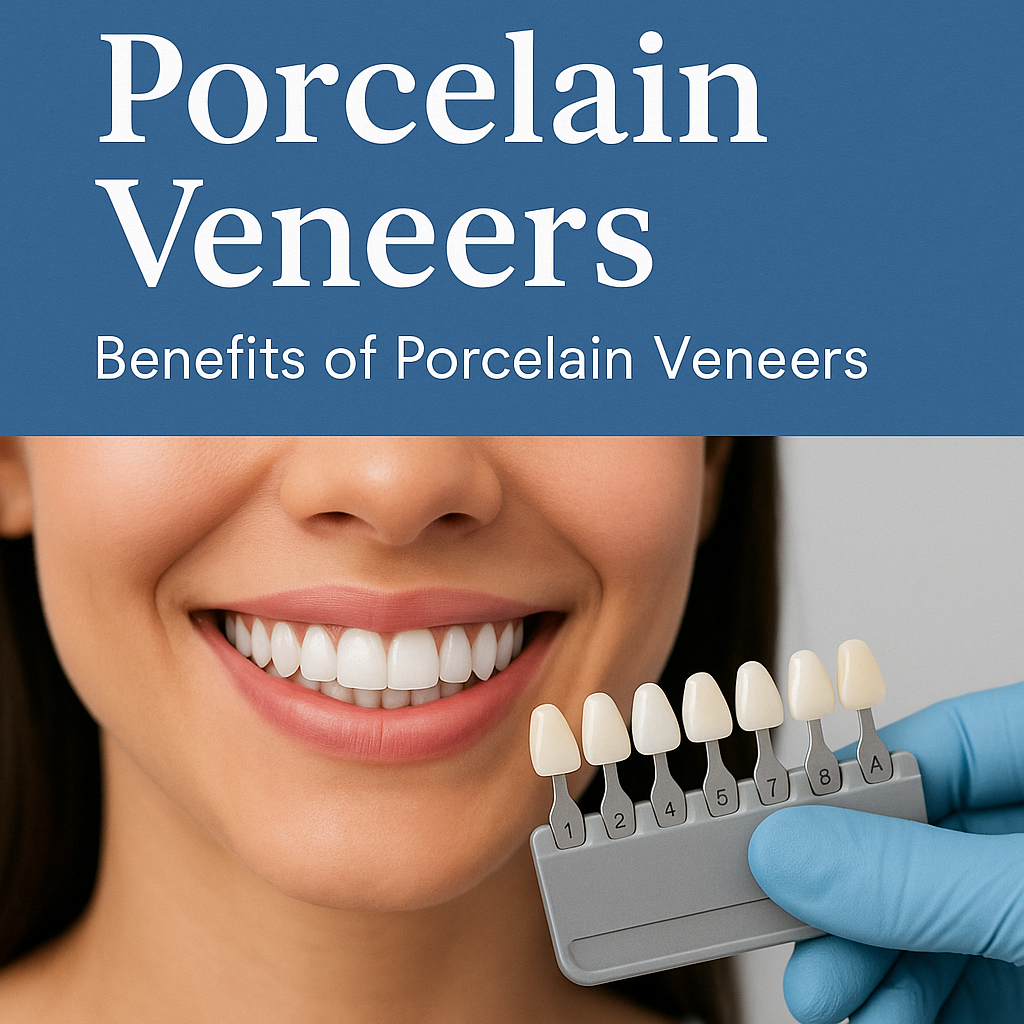
Porcelain Veneers Consultation: What Can Change the Plan?
Why the consultation changes the plan
A veneer consultation is where treatment becomes personalized. The main porcelain veneers page explains the service, but the consultation is where a dentist checks whether veneers fit your teeth, bite, and goals.
Two patients can want the same cosmetic change and still need different care. One may have enough healthy enamel for veneers. Another may do better with bonding, whitening, a crown, orthodontics, or staged treatment that starts with oral health issues first.
What the dentist checks first
The first part of the visit is usually a health check, not just a shade match. Dentists look for untreated decay, cracked areas, worn enamel, gum inflammation, and signs that a tooth has already lost too much structure. If decay or gum disease is active, those problems are usually treated first so the mouth is stable before any veneer decision.
The amount of enamel matters. Veneers depend on a reliable bond to healthy tooth structure. If a tooth has large fillings, major wear, or too little remaining enamel, bonding or a crown may be a better fit than a veneer.
When the plan may shift away from veneers
Veneers are not the only cosmetic option. Small chips or minor shape changes may sometimes be repaired with bonding. If colour is the main concern, whitening may be discussed first, because veneers are matched to a planned final shade and do not whiten later. If tooth position is the main issue, orthodontic treatment may be part of the plan.
When a tooth has more damage from wear, cracks, or previous treatment, a crown may provide more coverage than a veneer. The right choice depends on the tooth, not just the smile goal.
Bite forces, grinding, and veneer design
Clenching and grinding, also called bruxism, do not automatically rule out veneers, but they can change the plan. A study indexed in PubMed found more fracture and debonding in patients with bruxism, so the dentist may consider a different design, a different material, or a night guard.
How much of the biting edge should be covered is also case-specific. A systematic review suggests that preparation design and the amount of remaining tooth structure matter, and the evidence does not support one single approach for every patient.
Consent should cover risks, alternatives, and cost
In Ontario, informed consent should include the material risks, benefits, alternatives, and cost discussion in a way the patient understands. For veneers, that means talking openly about enamel reduction, the fact that the procedure is not fully reversible in general, and the follow-up care it will require.
Good questions to ask include: How much tooth reduction is likely? Is there enough enamel for a reliable bond? Should whitening happen first? Would bonding, a crown, orthodontics, or no treatment be a better fit? If I clench or grind, what protection would you recommend?
What maintenance usually looks like
Veneers still need routine care. That usually means daily brushing and flossing, regular exams, and attention to habits that place extra force on the teeth. If a night guard is recommended, it is usually part of protecting the restoration and the teeth around it. The exact follow-up plan and how long veneers last vary by material, bite, and patient factors.
If you are in Hamilton and want to review candidacy for veneers, the team at Excel Dental can help you compare options and plan the next step with your goals, bite, and oral health in mind.
Key sources
- Canadian Dental Association — Veneers
- RCDSO — Consent to Treatment FAQ
- PubMed — Survival Rates for Porcelain Laminate Veneers: A Systematic Review
This article is for general education only and does not replace personalized advice, diagnosis, or treatment from a licensed dentist.