
Bleeding Gums: What a Dentist Checks First
Bleeding gums, swelling, tenderness, or gums that seem to be pulling away from the teeth are worth a dental checkup—especially if the problem keeps coming back. The first visit is mainly about finding out how far the gum problem has progressed, not jumping straight to treatment.
What a dentist checks first
At a gum exam, the dentist usually starts with a health history and a conversation about symptoms: when the bleeding started, whether it happens during brushing or flossing, whether there is bad breath, sensitivity, a change in how teeth fit together, or a feeling that teeth are moving. Then the mouth is checked closely for redness, swelling, plaque, tartar, and areas where the gums look irritated.
- Six-point periodontal charting around each tooth, usually measured at six sites per tooth
- Pocket depths to see how much space exists between the tooth and gum
- Bleeding on probing, which can show active inflammation
- Recession and attachment loss, which help show whether support tissue has been lost
- Tooth mobility and whether teeth feel loose
- Furcations on back teeth, where bone loss between roots can make cleaning and control harder
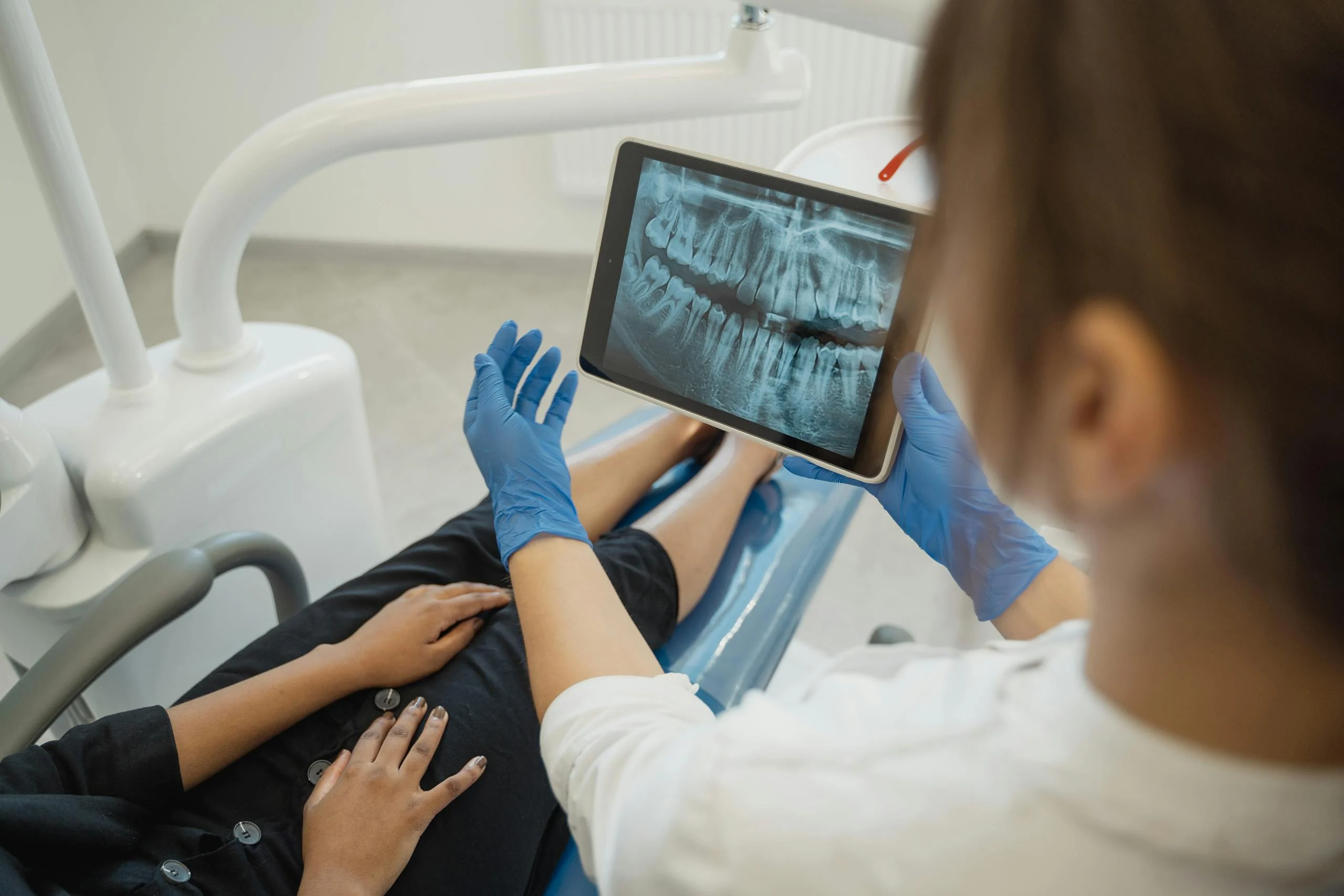
X-rays may be taken when they are needed to assess bone support and other structures around the teeth. They help complete the picture, but they are not the only test. Gum disease is diagnosed clinically first, using the exam, measurements, and history together.
How dentists tell gingivitis from periodontitis
To patients, gingivitis and periodontitis can look similar because both can cause bleeding and swelling. The difference is what is happening underneath the gums.
Gingivitis means the gums are inflamed, but there is not yet clear evidence of deeper attachment or bone loss. This stage is often reversible with prompt care and better daily cleaning.
Periodontitis means the problem has moved deeper and has started to affect the support tissues around the teeth, including the attachment and often the bone. Dentists do not rely on one pocket number alone. They look at the full pattern: pocketing, bleeding, recession, attachment loss, bone levels, and whether teeth are loose or have furcation involvement.
Why risk factors matter
Risk factors can change both the exam findings and the plan. Smoking can worsen gum disease and make healing harder. Diabetes can also affect how the gums respond and heal. Plaque control matters a lot, because plaque is the main trigger for gum inflammation.
Certain medications and health conditions can also affect gum bleeding, swelling, saliva flow, or how the tissues respond to treatment. That is why the health history is part of the diagnosis. If you are unsure whether a medicine or medical condition may be affecting your gums, bring a current list to the visit and ask the dental team to review it with you.
What usually happens after the exam
The next step depends on what the dentist finds. For some people, the plan is a more careful cleaning plus home-care coaching so the gums can settle down. For others, the dentist may recommend deeper cleaning below the gumline, known as scaling and root planing, if that is what the exam supports. After that, the gums are usually re-checked to see how well they responded.
If the disease looks more advanced, the dentist may suggest closer follow-up or referral for more specialized periodontal care. The plan is based on the exam findings, risk factors, and how the gums respond over time.
If your gums keep bleeding or they feel sore, loose, or receding in Hamilton, don’t wait for pain to be the signal. You can ask about a periodontal evaluation and read more about periodontal treatment. At Excel Dental in Hamilton, we can help you understand the exam findings and plan the next step if treatment is needed.
Key sources
- Gum disease symptoms and signs
- Clinical periodontal diagnosis review
- Periodontal staging and grading overview
- City of Hamilton: Dental Health
This article is for general education only and does not replace personalized advice, diagnosis, or treatment from a licensed dentist.