
CBCT Before Dental Implants: What 3D Imaging Can Show
Why a dentist may suggest CBCT before implants
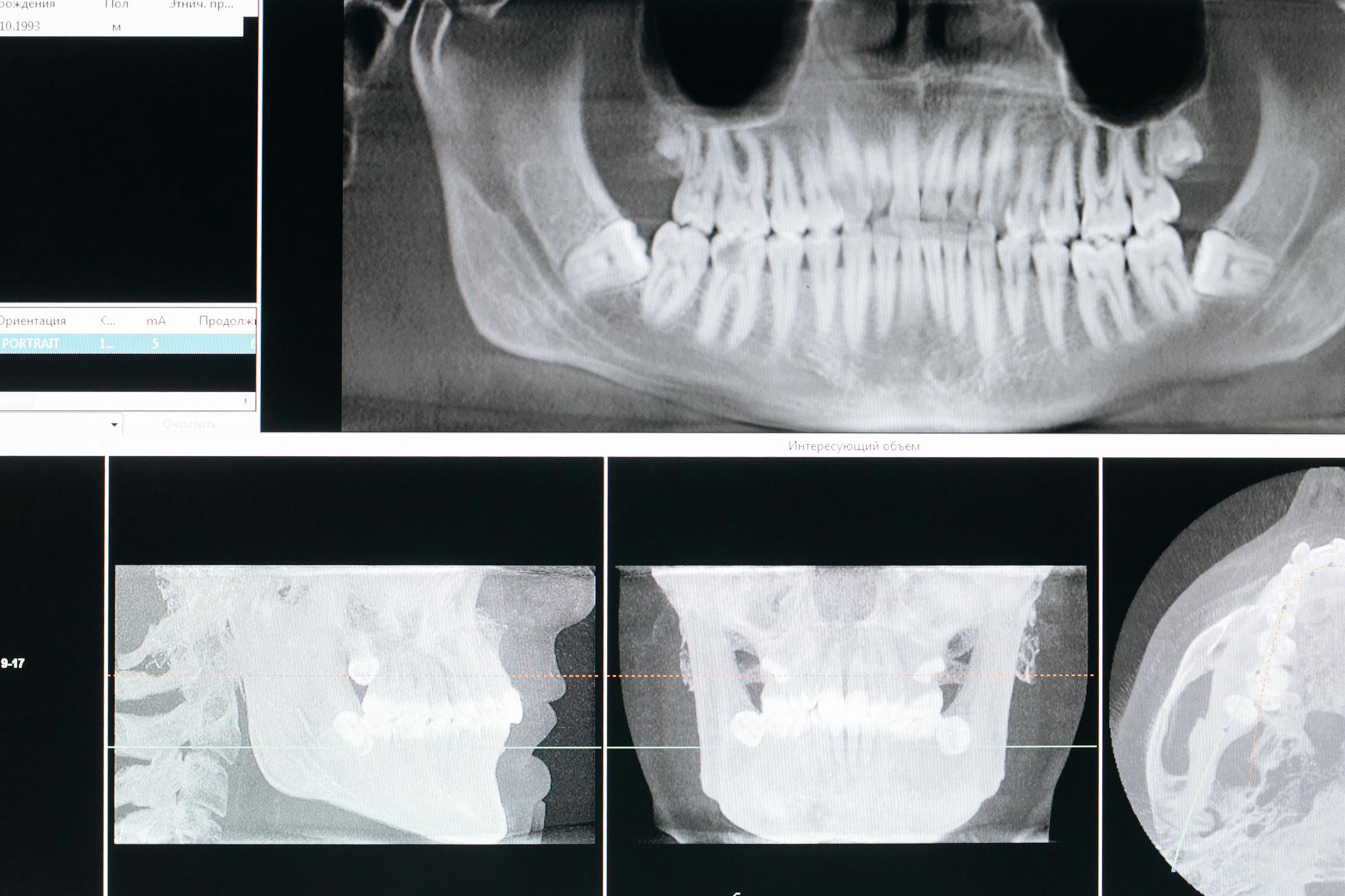
Before a dental implant is placed, the main question is not just “Where can the implant go?” It is also “Is there enough bone, and is there anything nearby that could change the plan?” A CBCT scan can help answer that question by giving a three-dimensional view of the area. It is a planning tool, not a routine scan for every patient.
What CBCT is, in plain language
CBCT stands for cone beam computed tomography. In simple terms, it is a 3D dental scan that shows the jaw from multiple angles. Compared with a flat 2D image, it can give your dentist a more complete view of the space where an implant may go.
What 3D imaging can show before implant placement
CBCT can help show bone height, bone width, and the shape of the ridge where the implant would be placed. It may also show clues about bone texture and density patterns, although bone quality is not measured perfectly by CBCT alone. In many cases, the scan helps the dentist judge implant size, angulation, and whether the site looks suitable for a straightforward placement or may need more planning.
It can also show nearby teeth and root positions, which matters when the space is tight or when an implant will sit close to an existing tooth.
Upper jaw and lower jaw are different
In the upper jaw, the sinus can be close to the planned implant site. CBCT can help show the sinus floor and how much bone is available beneath it. That information may affect whether bone grafting or another site preparation step is discussed.
In the lower jaw, the mandibular canal and related nerve structures may be close to the implant area. CBCT can help the dentist see the distance to that canal and plan around it. This does not remove risk, but it can improve planning when anatomy is close.
How CBCT may affect the treatment plan
One of the most useful parts of CBCT is that it can help a dentist decide whether the site may need bone grafting or another preparatory step before, or sometimes with, implant treatment. In other cases, the scan may show that the site already has enough bone and the plan can stay simpler.
That is why the scan is most helpful when it answers a specific question, rather than when it is used simply because an implant is being considered.
When a 2D image may still be enough
Not every implant patient needs a CBCT scan. For some straightforward cases, a careful exam plus a 2D image, such as a panoramic X-ray, may give enough information to start planning. Government of Canada guidance says CBCT should be ordered after a clinical exam and when lower-dose imaging does not answer the question.
That selective approach matters because CBCT gives more detail, but it also adds more radiation exposure than a basic 2D dental image. The scan should be used when the extra information is likely to change the plan.
Limits of CBCT
CBCT helps with planning, but it does not replace a clinical exam, your dental history, or your dentist’s judgment. It cannot prove that an implant will succeed, and it does not measure every aspect of bone quality with perfect precision. The image is one piece of the overall decision.
In Ontario, dental CT scanners are also regulated, and proper authorization, interpretation, and reporting are part of responsible use.
What to ask at an implant consultation
- What question will the CBCT answer in my case?
- Would a 2D image be enough, or would 3D imaging change the plan?
- What does the scan show about bone height, width, and nearby anatomy?
- Could the scan change whether grafting or other site preparation is needed?
- How does this fit with the rest of my implant consultation?
If you are thinking about implants in Hamilton, Excel Dental can review whether a CBCT scan would add useful planning information at your visit. If you want to learn more about the treatment itself, see our dental implants page.
Key sources
- Government of Canada: Oral Health
- Royal College of Dental Surgeons of Ontario — Dental CT Scanners
- CBCT Assessment for Dental Implant Surgery at the Maxilla
This article is for general education only and does not replace personalized advice, diagnosis, or treatment from a licensed dentist.