
When Is a 3D Dental Scan Worth It?
Sometimes a dental decision needs more than a routine X-ray. If a tooth is close to a nerve, an implant site needs careful mapping, or a root canal problem is not fully clear on standard images, a dentist or specialist may discuss a cone-beam computed tomography scan, often called a CBCT scan.
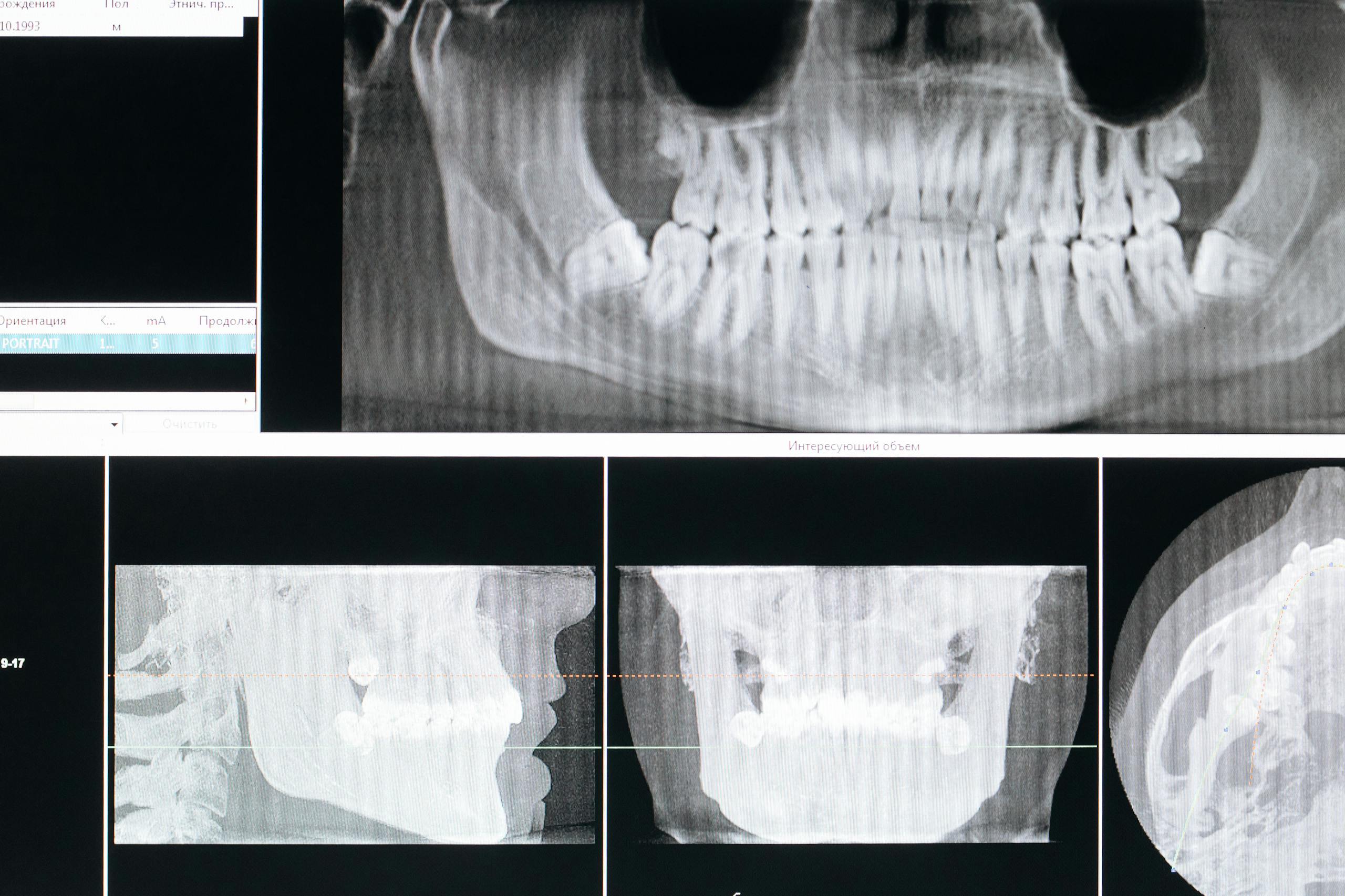
CBCT is a 3D dental scan. It can show teeth, roots, bone, nerves, sinuses, and nearby anatomy in more detail than a standard 2D dental X-ray. The important question, however, is not whether 3D imaging is newer. It is whether the scan is likely to answer a specific clinical question that could change diagnosis, safety, or treatment planning.
That distinction matters. Current guidance from the American Dental Association and a 2026 evidence-based radiography recommendation support selecting dental imaging based on the patient’s history, exam findings, previous images, and the clinical question being asked. In other words, CBCT is a selective planning tool, not a routine replacement for regular dental X-rays.
What a CBCT scan can show that 2D X-rays may miss
Standard dental X-rays are still the right starting point for many situations. They are often very useful for checking decay, bone levels, infections, and other common concerns. But because they flatten a three-dimensional area into a two-dimensional picture, some details can overlap or be harder to judge clearly.
A CBCT scan creates a 3D view of a limited area of the mouth or jaws. Depending on the reason for the scan, that added detail may help a dentist or specialist assess:
- the height and width of bone
- the position and shape of roots
- the relationship between teeth and nerves
- the location of the sinus floor
- complex anatomy that may not be obvious on 2D images
- some bone defects or surgical landmarks
That does not mean more imaging is automatically better. It means 3D imaging can be helpful when the extra detail is likely to affect the plan.
When CBCT may be worth it
Implant planning
CBCT is often discussed before some dental implant procedures because implants rely on accurate assessment of available bone and nearby anatomy. In selected cases, 3D imaging may help show bone dimensions and the position of structures such as the maxillary sinus or the inferior alveolar nerve. A systematic review in implant dentistry supports the value of CBCT for presurgical assessment in appropriate cases, while also reinforcing that radiation exposure should still be justified case by case.
That said, not every implant case automatically needs a CBCT scan. The decision depends on the site, the anatomy, the planned procedure, and whether standard imaging already provides enough information.
Selected root canal situations
Most routine endodontic care begins with clinical examination and standard dental images. But a CBCT scan may be considered when 2D imaging is inconclusive or when the anatomy appears complex. Examples can include a suspected fracture, an uncertain source of persistent symptoms, unusual root anatomy, or questions about the extent of a lesion that may affect treatment planning.
The key point for patients is that CBCT is usually reserved for selected situations where the extra detail may answer a question that standard images have not resolved.
Wisdom teeth close to important anatomy
For some wisdom teeth, a panoramic X-ray provides enough information. In other cases, the roots may appear close to a major nerve in the lower jaw or close to the sinus in the upper jaw. When that relationship is unclear and could influence the surgical approach or risk discussion, a CBCT scan may be considered to better understand the anatomy before treatment.
Some complex oral surgery or periodontal decisions
In selected surgical or periodontal cases, 3D imaging may help clarify the shape of a defect, the extent of bone loss in a specific area, or the anatomy around a planned procedure. Again, the standard is not to scan routinely. The standard is to ask whether the scan is likely to change management.
When standard 2D X-rays are often enough
Many dental visits do not call for 3D imaging. Standard X-rays are often enough for:
- many routine checkups and recall visits
- basic cavity detection when imaging is indicated
- many straightforward toothaches or infections
- monitoring many common dental conditions
- many uncomplicated treatment plans where 3D information is unlikely to change the next step
If a dentist says a CBCT scan is not needed, that is not a sign of missing technology. It may simply mean that standard imaging already answers the clinical question well enough.
How dentists try to minimize radiation
Dental imaging should be justified, not automatic. The American Dental Association notes that radiographs should be prescribed only when necessary for diagnosis and treatment planning. For CBCT specifically, the 2026 patient-selection recommendations support using it when lower-exposure options will not provide the information needed.
In practice, that means dentists and specialists try to reduce unnecessary exposure by:
- starting with a history and clinical exam
- reviewing any recent X-rays that already exist
- ordering imaging only for a specific clinical reason
- choosing the smallest field of view that answers the question
- avoiding 3D scans when 2D images are enough
Patients do not need to memorize imaging terminology to ask good questions. It is reasonable to ask what the scan is expected to show and whether it is likely to change the plan.
Ontario rules patients should know
Ontario adds an important patient-safety safeguard. According to the Royal College of Dental Surgeons of Ontario, dentists or specialists who prescribe, order, take, interpret, or report on CBCT scans must be CT-authorized by the RCDSO.
This is also why referrals matter. If a general dentist believes a CBCT scan may be helpful, that dentist can identify the possible need and refer the patient to a CT-authorized dentist to determine whether the scan is clinically justified. The referring dentist does not need CT authorization if they are not prescribing, ordering, taking, interpreting, or reporting on the scan.
The RCDSO also says referrals for CBCT acquisition should include enough clinical information to justify the scan. That includes relevant history, a provisional diagnosis or proposed treatment, and copies or reports of recent images from the area of interest when available. This helps reduce inappropriate or unnecessary imaging and supports safer treatment planning.
Questions to ask before agreeing to a CBCT scan
If a 3D scan is recommended, it is reasonable to ask:
- What question will this scan answer?
- Could the result change the treatment plan or improve risk planning?
- Do my existing X-rays already answer the question?
- Is a smaller field of view possible?
- Who will interpret the scan and explain the findings?
These questions are not challenging the dentist. They are part of informed decision-making.
The bottom line
CBCT can be very useful in selected situations, especially when a complex implant, root canal, wisdom tooth, surgical, or periodontal decision depends on anatomy that standard images cannot show clearly enough. But it is not a routine replacement for regular dental X-rays, and it should not be ordered simply because it is available.
The most appropriate scan is the one that answers the right question with the least reasonable exposure. If a complex treatment decision comes up, ask how 3D imaging would change the plan, what alternatives exist, and who will review the scan.
If you are in Hamilton and a complex dental decision is being discussed, Excel Dental can help review the questions involved, explain whether 3D imaging may add useful planning information, and help you understand what kind of imaging review may be appropriate for your case.
Sources
- RCDSO CBCT Scan Referrals
- American Dental Association X-Rays/Radiographs
- JADA CBCT Patient Selection Recommendations
- Systematic Review of CBCT in Implant Dentistry
- ADA Clinical Guidelines
- RCDSO Standards and Guidance
- Pubmed
- Pubmed
- Pubmed
- Pubmed
- Pubmed
- Adanews
This article is for general education only and does not replace personalized advice, diagnosis, or treatment from a licensed dentist.