
What to Use When String Floss Is Not Working: A Simple Between-the-Teeth Decision Guide
If string floss shreds, slips, feels awkward, or simply does not fit well, that does not mean you are out of options. The goal is still the same: clean between your teeth every day. What changes is the tool.
This is a simple decision guide, not a one-size-fits-all rule. The best choice depends on how tight the spaces are, whether you have braces or gum recession, and how easy the tool is to use with your hands. Research and patient guidance support matching the cleaner to the space and the person, rather than assuming one product works for everyone.
A simple decision tree
- If the spaces between your teeth are tight: string floss may still be the right shape, but a floss holder can make it easier to reach the back teeth and keep better control.
- If floss keeps shredding or catching: ask whether there is a rough edge, a filling, or a contact that should be checked. Do not keep forcing the same spot.
- If the spaces are wider, or there is gum recession: an interdental brush or proximal brush may fit better than floss.
- If you have braces or another fixed appliance: you may need a mix of tools, such as a floss threader, a floss holder, or a small interdental brush depending on the space.
- If hand skills are limited: a tool with a handle, a floss holder, or a water flosser may be easier to use consistently.
What the main options are for
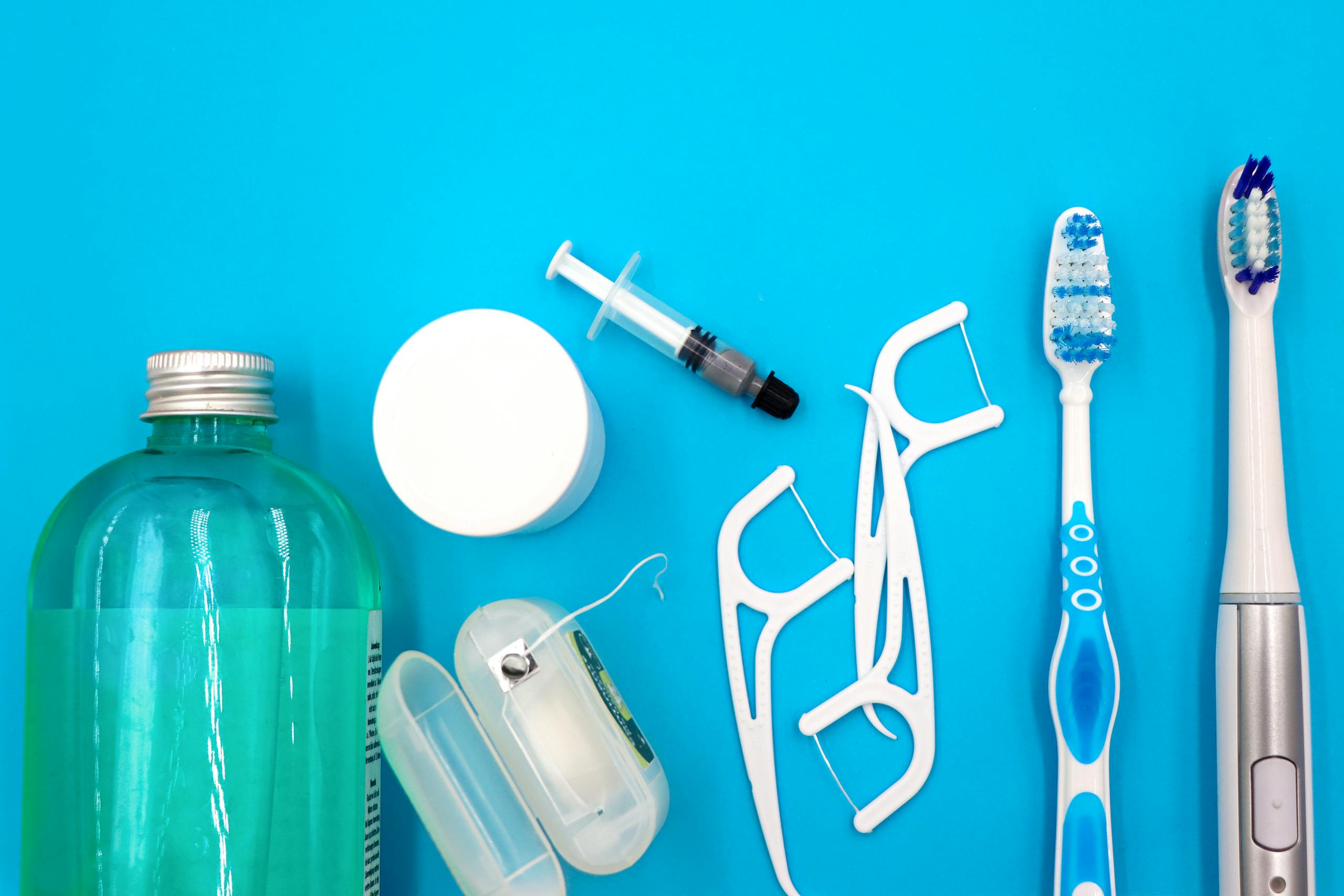
Floss holders are helpful when wrapping floss around your fingers is the part that makes flossing difficult. They still use floss, but they can be easier to hold steady, especially for back teeth.
Interdental brushes work best where there is enough space for the bristles to slide in without being forced. They are often a practical choice when teeth are a little farther apart, when gum recession has opened up the space, or when food tends to get stuck in the same area.
Soft picks or rubber picks can be useful for people who want a simple handheld option. They are not the right answer for every space, but some patients find them easier to tolerate than string floss.
Water flossers can help flush loose debris from around braces or other hard-to-reach areas. They can be a useful backup or add-on when dexterity is a problem, but they are not a complete replacement for all between-the-teeth cleaning.
What not to do
- Do not force a brush or pick into a space that feels too tight.
- Do not keep using a tool that cuts your gums or makes the same area sore every day.
- Do not choose a product only because the package sounds impressive.
- Do not assume bleeding means you should stop cleaning that area forever.
Some bleeding can happen when gums are irritated, but bleeding that keeps coming back, especially if it continues after you have improved home care, is a good reason to get the area checked.
When to ask a hygienist or dentist
A dental hygienist or dentist can usually show you the simplest tool for your mouth, help size an interdental brush, and check whether a space is too tight or too open for a given device. That can save a lot of trial and error.
Book a visit if you have ongoing bleeding, pain, repeated failure with home care, braces, gum recession, or you are not sure which tool fits. Persistent bad breath is another reason to have the area examined rather than keep switching products.
For a general oral-hygiene refresher, see our general dentistry page. If you are in Hamilton and want help choosing a between-the-teeth cleaner that you will actually use, book a hygiene visit or exam and ask the team to show you the simplest option for your mouth.
Key sources
This article is for general education only and does not replace personalized advice, diagnosis, or treatment from a licensed dentist.